Monday, May 09, 2016

Pork Braised in Milk


I love Pork Braised in Milk. The milk curdles and becomes a flavorful gravy as it condenses and blends with the natural fluids from the pork. This is a super easy dish and the leftovers make great sandwiches. We served the pork over Polenta with the thickened milk / pork gravy on top. Yum! You can get the recipe from our blog of: October 17, 2011. Click the date to get the recipe.


We started with an Asparagus Salad from a new recipe we found in The New York Times. I never would have thought of a Strong Mustard Vinaigrette over the Asparagus, but it is a great recipe.

Asparagus With Mustard Vinaigrette
New York Times

Here is an easy, springtime recipe that takes no time at all and puts the light flavors of the season right onto your table. Cooking time is key: both the asparagus and the eggs must be watched carefully. Arrange everything on a plate beautifully, and throw open the windows to spring.

INGREDIENTS
1-½         pounds large or medium asparagus
4         large eggs
1         small shallot, finely diced
2         tablespoons red wine vinegar
Salt and pepper
2         tablespoons Dijon mustard
¼         cup extra-virgin olive oil
1         tablespoon finely cut chives

PREPARATION

1.   Snap off and discard the tough bottoms of each asparagus spear. If using large thick asparagus, peel the lower ends with a vegetable peeler. Medium asparagus will not need peeling.
2.   Bring a medium saucepan half filled with water to a boil, carefully add the eggs and simmer briskly for 9 minutes (10 minutes for a slightly firmer yolk). Transfer the eggs to a bowl of ice water to cool. Shell the eggs and set aside.
3.   Make the vinaigrette: In a small bowl, place the shallots, vinegar and a pinch of salt. Let shallots soften for 5 minutes. Stir in the mustard to dissolve, then whisk in the olive oil to make a thick dressing. Season to taste with salt and pepper.
4.   In a large stainless-steel soup pot bring 4 quarts of well-salted water to a rolling boil. Add the asparagus and cook for 3 to 5 minutes, until just done. Remove asparagus with a large strainer and spread out on a baking sheet lined with a clean kitchen towel. Asparagus may be served warm or at room temperature.
5.   To serve, place asparagus on a platter or individual plates. Spoon the vinaigrette over the asparagus. Garnish with quartered eggs (or roughly chop the eggs if you prefer). Sprinkle with chives.

Sunday, May 08, 2016

Thai Pork Fried Rice


When ever we eat at Chi Spacca we always bring home the extra pork from the Tomahawk Pork Chop and make Thai Style Pork Fried Rice. It is wonderful. You can get the recipe from our blog of: April 24, 2013. Click the date to get the recipe. It is comfort food at its best!

Wednesday, May 04, 2016

Hawaiian Style Ribs

Pat Applying the Marinade

Crab Cakes!


Ribs Anyone?


Bok Choy

Cherry Pie

Pat and Doshi stayed at our house and decided to cook Hawaiian Style Ribs for us. They had prepared the rub and brought it with them. We purchased the ribs Saint Louis Style Ribs at The Farmer's Market from Huntington Meats.  Surprisingly Saint Louis Style Ribs are hard to find.

We started with Crab Cakes from Cape Seafood. They are ready to fry, and they are delicious. We also purchased his Tartar Sauce.

We cooked the Ribs on the grill. It was almost like being in Hawaii! They also brought us Bok Choy that we cooked in the egg. 

We invited Tom and he loved it all (as did we).

For dessert we had a Cherry Pie from Cake Monkey. It was a great meal.


Monday, May 02, 2016

Chicken Provencal


I love Chicken Provencal. We often make this recipe. You can find the recipe in our blog of: April 26, 2015. Click the date to get the recipe.

We started with a Salad of Prosciutto, Almonds and Nectarines. 

Saturday, April 30, 2016

Flavored Rice and Halibut

Rice Flavoring from Japan


When we were in Japan we purchased several boxes of Rice Flavorings. If you have a rice maker (and you should if you like rice) after adding Rice and Water you stir in the box of flavorings. This one was a chicken seasoning. It has actual pieces of chicken in it. You simply stir the flavoring in to the rice mixture before cooking, close the cooker and let it make perfect rice. We served the Flavored Rice with our leftover Halibut. I have been to two different Japanese Markets in DTLA and haven't found the exact box yet. I need to go to a big Japanese Market and maybe I can find it. Meanwhile at most Japanese markets you can find a wide variety of rice seasonings.

Friday, April 29, 2016

Roasted Halibut With Lemons, Olives and Rosemary


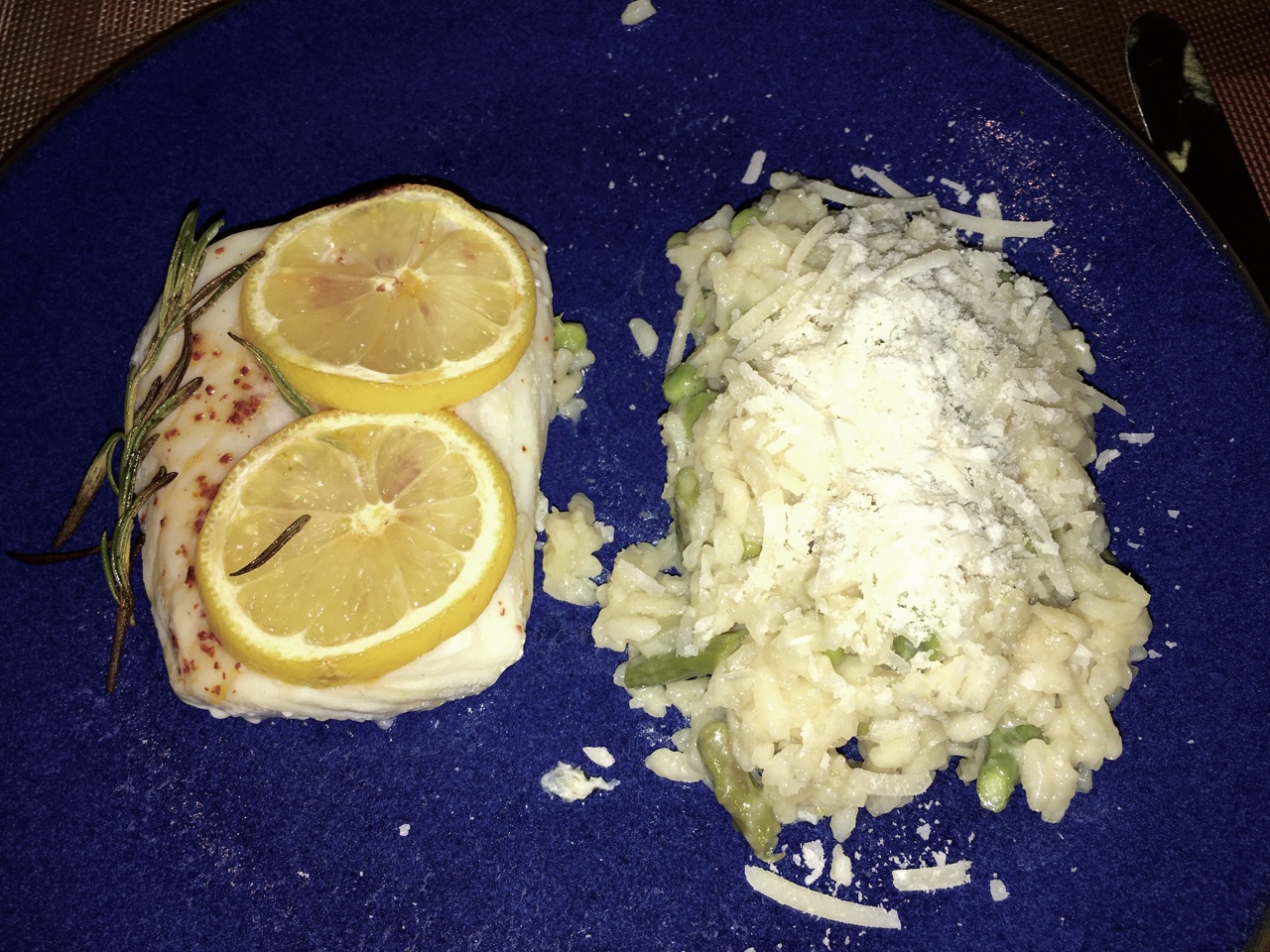
We saw a recipe in The New York Times for Roasted Halibut With Lemons, Olives and Rosemary. McCall’s Meat and Fish had beautiful Halibut, so it was an easy call to make this recipe. It is excellent and the Halibut is so moist and flakey. This is a great recipe. It is especially wonderful because there are NO bones!

We started with an Asparagus Salad with our new favorite Mustard Vinaigrette. You can find the recipe on our blog of May 9, 2016. Click the date to get the recipe.


Roasted Halibut With Lemons, Olives and Rosemary
New York Times

INGREDIENTS

2 (8-ounce) halibut fillets, preferably at least 1-inch thick
1-½         teaspoons extra virgin olive oil, more to taste
Kosher salt
Ground chile pepper, preferably Turkish or Aleppo
2         rosemary branches
1         small lemon, very thinly sliced
¼         cup sliced, pitted calamata or other good-quality black olives

PREPARATION

1.   Heat oven to 450 degrees. Place fish in a baking dish, brush fillets with 1 teaspoon of oil and season with salt and chile pepper. Top each fillet with a rosemary branch and several slices of lemon. Drizzle remaining oil over lemon slices and sprinkle with additional salt. Scatter olives over fish and pan.

2.   Bake until just opaque, about 10 minutes. If lemon slices have not browned or singed (this will depend on how thinly you slice them), place pan under broiler for 1 to 2 minutes. Serve drizzled with more olive oil; sprinkle with more salt and chili, if desired.


Monday, April 25, 2016

Risotto and Slow-Roasted Salmon


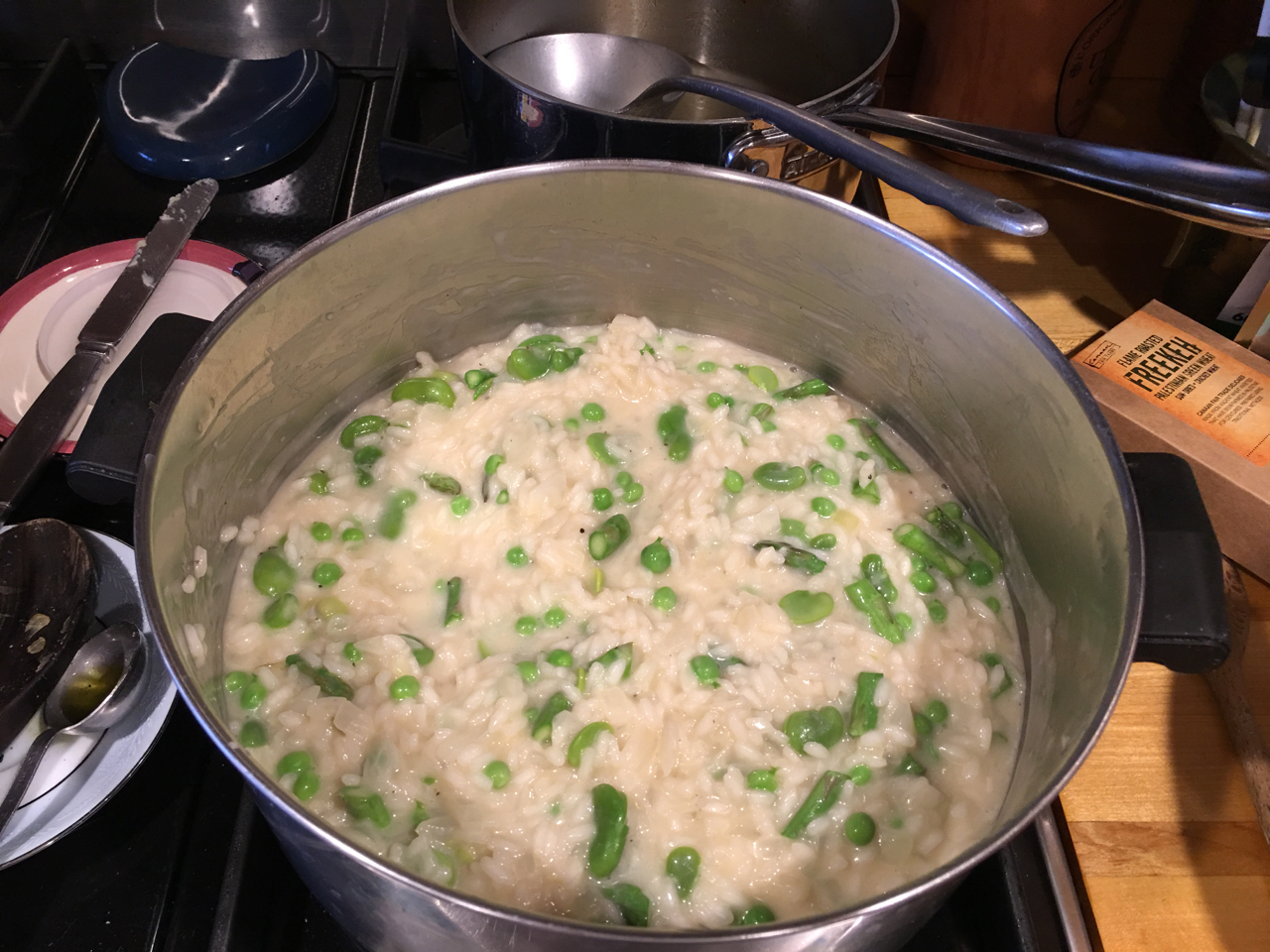
We started with an Asparagus and Fava Bean Risotto. The two spring vegetables were both fresh in the market and we couldn't resist. You can find our basic Risotto recipe in our blog of October 15, 2012. Click the date to get the recipe.

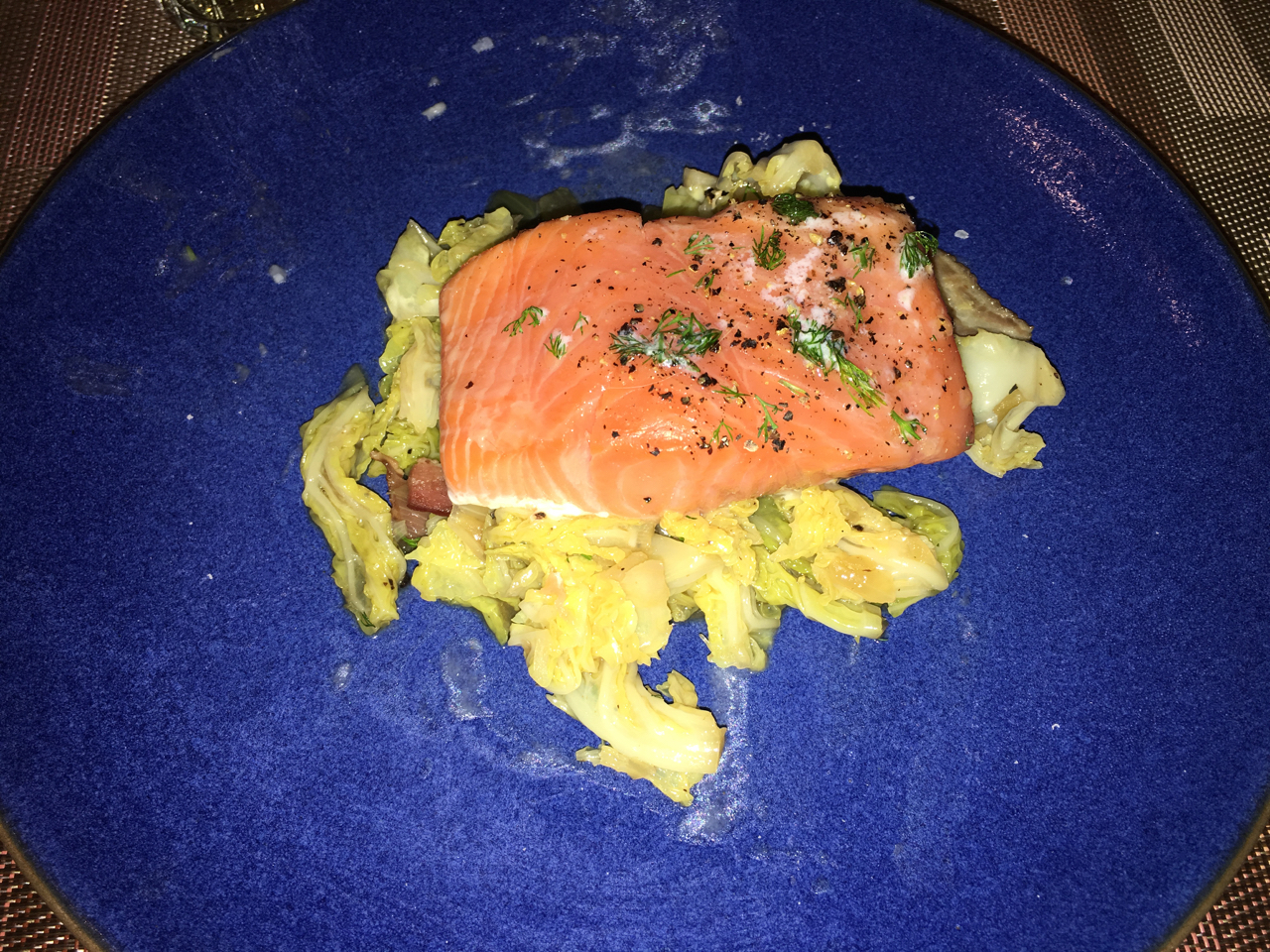
We followed the Risotto with Slow-Roasted Salmon With  Cabbage,   Bacon,  and  Dill. This is a favorite recipe of ours. You can find the recipe on our blog of: May 31, 2014. Click the date to get the recipe. 

Tuesday, April 19, 2016

Colonoscopy Meal


It was time for my 5 year colonoscopy. In the days before the procedure I needed to eat white foods (no green vegetables, tomatoes or nuts). We decided to make Cauliflower Soup and . The recipe for the Cauliflower Soup can found on our blog of: January 26, 2009. Click the date to get the recipe. For the main course we had Mac N' Cheese. This is such a great recipe. If you haven't made it you should.  You can get the recipe by looking at our blog of: Dec. 27, 2007. Just click on the date to get to the blog. The best news is the test results were fine, I don't need to go back for 5 years!

Thursday, April 14, 2016

Fontina, Orecchiette, Wild Mushroom Pasta


We found this recipe in The New York Times for this very rich baked FontinaOrecchietteWild Mushroom Pasta. You can find it on our blog of: March 1, 2016. Click the date to get the recipe.

We started with a Salmon Salad and then The Hungry Cat SaladYou can read about why it is called The Hungry Cat Salad on our blog post of: November 21, 2009. Click the date to get the recipe.

Monday, April 11, 2016

Spring Fava Beans and Asparagus


Spring means Fava Bean Pasta. Fava Beans need to be double peeled.  I love this pasta. We make it every year in the spring. We started with Asparagus Topped with an Fried Egg.  The pasta is highly flavored with my favorite seasoning: bacon. You can find the recipe on our blog of: April 30, 2008. Click the date to get the recipe.

Friday, April 01, 2016

Pasta Bolognese


Shumon joined us for dinner. We started with a Tangerine, Salad. We then had Pasta with Bolognese Sauce from a New York Times article about Marcella Hazan. The pasta sauce is mild and rich. It is very good.

Marcella Hazan's Bolognese Sauce
The New York Times

After the death in 2013 of Marcella Hazan, the cookbook author who changed the way Americans cook Italian food, The Times asked readers which of her recipes had become staples in their kitchens. Many people answered with one word: "Bolognese." So here it is: Ms. Hazan's classic, go-to Bolognese sauce, which one reader called "the gold standard." Try it and see for yourself.

INGREDIENTS

1         tablespoon vegetable oil
3         tablespoons butter plus 1 tablespoon for tossing the pasta
½         cup chopped onion
         cup chopped celery
         cup chopped carrot
¾         pound ground beef chuck (or you can use 1 part pork to 2 parts beef)
Salt
Black pepper, ground fresh from the mill
1         cup whole milk
Whole nutmeg
1         cup dry white wine
1-½         cups canned imported Italian plum tomatoes, cut up, with their juice
1 ¼ to 1 ½ pounds pasta
Freshly grated parmigiano-reggiano cheese at the table

PREPARATION

1.     Put the oil, butter and chopped onion in the pot and turn the heat on to medium. Cook and stir the onion until it has become translucent, then add the chopped celery and carrot. Cook for about 2 minutes, stirring vegetables to coat them well.

2.     Add ground beef, a large pinch of salt and a few grindings of pepper. Crumble the meat with a fork, stir well and cook until the beef has lost its raw, red color.

3.     Add milk and let it simmer gently, stirring frequently, until it has bubbled away completely. Add a tiny grating -- about 1/8 teaspoon -- of nutmeg, and stir.

4.     Add the wine, let it simmer until it has evaporated, then add the tomatoes and stir thoroughly to coat all ingredients well. When the tomatoes begin to bubble, turn the heat down so that the sauce cooks at the laziest of simmers, with just an intermittent bubble breaking through to the surface. Cook, uncovered, for 3 hours or more, stirring from time to time. While the sauce is cooking, you are likely to find that it begins to dry out and the fat separates from the meat. To keep it from sticking, add 1/2 cup of water whenever necessary. At the end, however, no water at all must be left and the fat must separate from the sauce. Taste and correct for salt.

5.     Toss with cooked drained pasta, adding the tablespoon of butter, and serve with freshly grated Parmesan on the side.


Tuesday, March 29, 2016

Clam Chowder Black Cod and Rice with Mushrooms


We had left over Black Cod with Miso Sauce. Normally I don't like left over fish but the Black Cod makes great leftovers. We let it warm to room temperature and served the fish with Rice. On our last trip to Japan we had brought home several boxes of Rice Flavorings that are added to the rice. This one happened to be Chicken and Mushroom.  If you have a rice cooker it is a no-brainer. Simply measure the rice and add the appropriate amount of water, then stir in the contents of the box. Any Asian market will have a variety of flavors and if you can't read Japanese, just look at the picture on the cover. We started with Clam chowder that we had purchased at Cape Seafood.

Monday, March 28, 2016

Black Cod with Miso Sauce

Hot off the Griddle

We wanted to check out the new fish market Cape Seafood. It was just opened by Michael Cimarusti the owner of Providence Restaurant and Connie and Ted's. We bought some beautiful Black Cod with the intention of making Black Cod with Miso Sauce one of our favorite fish presentations. We first had it of course at Matsuhisa Restaurant. You can get the recipe from our blog of: May 12, 2009. Click the date to get the recipe. It is wonderful.


We started with an Asparagus Salad. Boil the Asparagus for 3 minutes. Top with brown Butter that we sautéed breadcrumbs in. Sieve a hardboiled egg over the top or combine with the breadcrumbs finally sprinkle with salt and pepper. Perfection!

Thursday, March 24, 2016

Sausage with Pot Roast Sauce and Polenta


We finished the Pot Roast leftovers. We just loved the sauce. Rather than throw it out, I decided to keep the sauce and add Sausages to it. We served it over Polenta. The idea was a good one but it didn't work. The Pot Roast Sauce and the Sausage did not make for a good paring. It might have been a factor of the flavor of the Sausage we chose. Oh well, we tried.

Wednesday, March 23, 2016

Swordfish


We purchased beautiful Swordfish Steaks at McCall’s Meat andFish. We had read an article in The New York Times about cooking fish. We wanted to try their recipe. It is worth reading the article. The recipe is buried within it.

We served the Swordfish and Butter Sauce over our very favorite and rich mashed potato recipe. We used the recipe for Garlic Mashed Potato recipe in TheBalthazar Cookbook by McNally, Nasr, Hanson. This is a fantastic recipe - it is super-rich! You can find the recipe on our blog of: November 12, 2012. Click the date to get the recipe.

With the Swordfish Cathy sautéed fresh Snap Peas. It was a delicious dinner.

Read the article and recipe below about cooking fish.

Conquering the Fear of Cooking Fish
The New York Times

Fear of fish can afflict even the most confident cook.
Fewer and fewer fish have crossed my stove in recent years. This is partly out of guilt, because wild species are so often out of season or endangered, and farmed fish are so often unappealing. It is partly because in my apartment, to cook fish for dinner is to live with its smell for a day and a half. And it is partly because I ate so much fancy fish in restaurants to make up for my failings as a home cook that I had forgotten how delicious a simple buttery pan-fried fillet can be.
The modern fashion in restaurants is to serve fillets swimming in a broth, juice or nage (as if returning to water is somehow natural for cooked fish). Other chefs like oil-poaching, which involves a slow simmer in gallons of top-quality oil; expensive and impractical for Tuesday-night dinner at home.
And others recommend that home cooks start with en papillote: folding up individual fillets in parchment paper with butter and herbs, which steams the fish and produces a kind of thin broth. This is not a thrilling outcome.
For weeknight home cooking, I wanted a way to cook a fish fillet the way I cook all my favorite proteins (steaks, shrimp, lamb chops): quickly, simply and over high-enough heat to bring on the browning that makes food crisp, appetizing and fragrant. (Food science nerds call them Maillard reactions.) But a simple sear in oil isn’t the answer for fish: overcooked and flavorless fillets are the result.
I brought the quandary to Mark Usewicz, a former chef and current co-owner of Mermaid’s Garden in Brooklyn, where he teaches classes for home cooks, like “How to Cook Fish in a New York City Apartment.”

His solution (of course) involved butter.
The best way to cook a fish fillet, he said, is on top of the stove in a heavy skillet, with constant attention — not a tall order, as the whole process takes less than five minutes from start to finish. The short cooking time seriously reduces the chance of lingering smells.
The initial sear should be in oil that will not burn over high heat: grapeseed, canola or even extra-virgin olive oil. (Although experts advise us not to waste extra-virgin oil on sautéing, using a few teaspoons here and there is well worth it for convenience and taste.)
Continue reading the main story
To finish the cooking, add a nut of butter to the pan, flip the fillet and baste furiously. The melting butter will keep the flesh tender, help form a tasty crust and finally brown lightly to become a sauce for the finished dish. A few fresh herb sprigs tossed in at the same time perfume the whole thing nicely.
“It’s a variation on the most basic restaurant recipe, the first one you learn at the fish station,” he said. In most restaurant kitchens, the cooking starts on top of the stove but is finished in a hot oven, to make room for the next table’s order. For home cooks, heating the oven to 400 degrees for five minutes of cooking time is an unnecessary step.
Renee Erickson, a Seattle chef who specializes in seafood at her restaurants, the Whale Wins, the Walrus and the Carpenter, Boat Street Café and Barnacle, also relies on butter-basting as the best basic way to cook fillets, from fatty salmon to slender flounder. “There are more delicate ways to cook fish, I suppose,” she said, but not tastier ones.
“If you order a pan-fried fillet from one of our kitchens, it comes out seriously browned,” she said. If the pan and contents get too hot during the cooking and threaten to scorch, she advised, add a bit more cold butter or squeeze in the juice of half a lemon.

Melina Hammer for The New York Times
The method works for small whole fish, too, she said, as well as skinless and skin-on fillets. You can score the skin with the tip of a sharp knife to prevent the fillet from curling as it cooks or (even easier) just press down on it lightly for the first minute or so of cooking.
What kind of fish to buy for this dish? Assuming your fish is in good shape, and the right thickness — not less than a half-inch thick or more than an inch — almost any fillet can be cooked this way, from brook trout to Arctic char. Black cod, rockfish and halibut are excellent choices from the Pacific; from the Atlantic, sea bass, grouper and snappers; red drum from the Gulf of Mexico.
Mr. Usewicz said that selecting the right fish for a particular recipe is prominent among the anxieties people bring into his shop.
“It is amazing how afraid people are of fish,” he said. “Afraid of cooking it, afraid of buying it, afraid of keeping it.” Most of his customers, for example, firmly believe that fish can’t even be kept overnight in the refrigerator without spoiling. “Fish is like any other kind of protein,” he said. “It’s perishable.” But that doesn’t mean it’s on the verge of spoilage.
Continue reading the main story
“A really nice piece of fish lasts a few days in the fridge, and it doesn’t smell up your house any more than steak does,” he said, as long as it’s been treated properly from the moment of catch. That usually means eviscerated on deck, frozen or flown to market within hours and kept cold at all points on the way to the case.
“People get all caught up in choosing exactly the right kind of fish,” he said. “But really, the most important thing that will affect your dish is how it’s handled before you ever see it.”