Tuesday, February 08, 2022

Veal Chops and the Best Potato Ever!

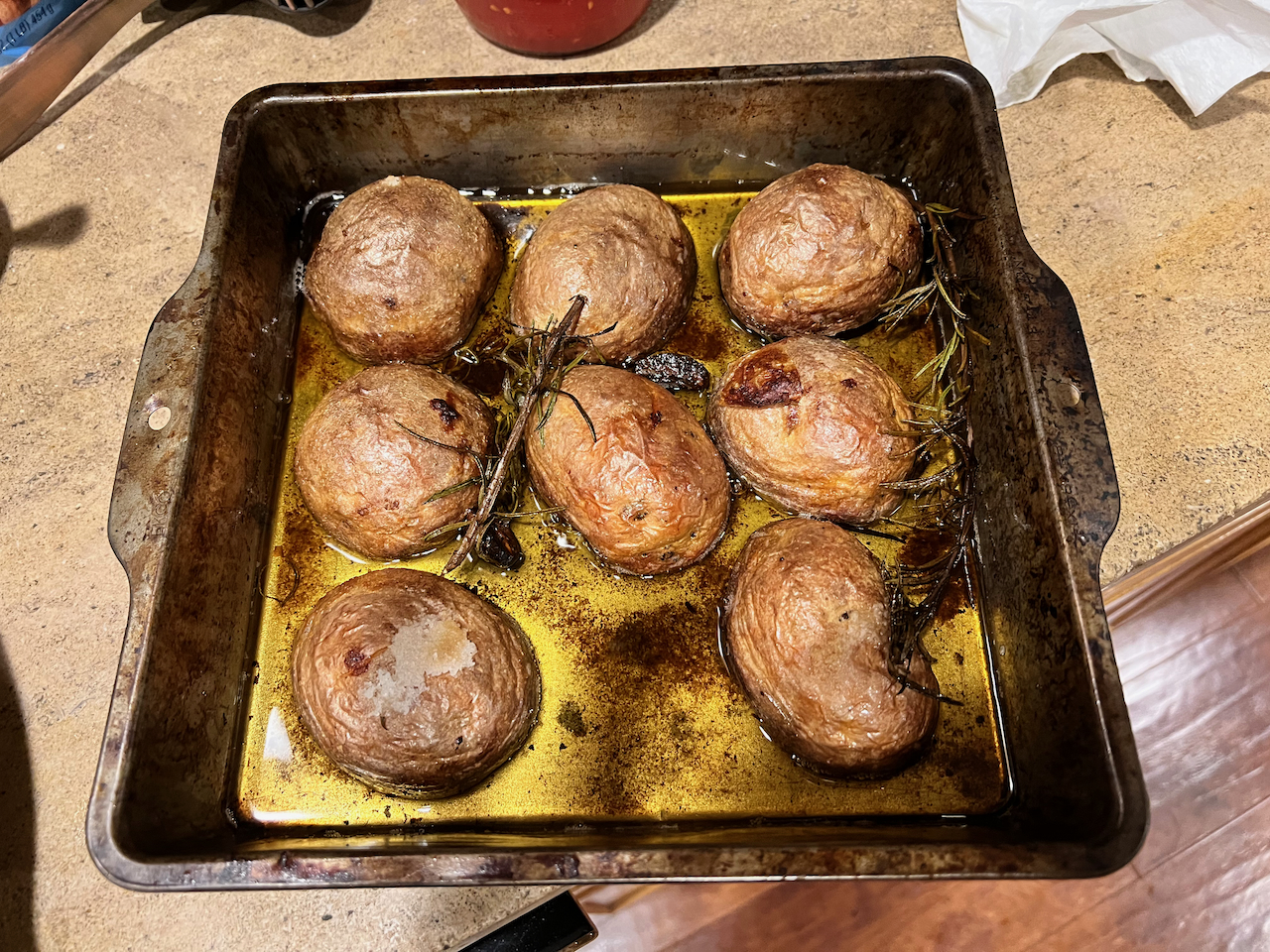
We were at McCall's Meat and Fish and saw some perfectly beautiful Veal Chops. We decided to make them. Cathy found an incredible Baked Potato recipe from Nancy Silverton. This recipe includes a separate recipe for Bagna Cauda which we did not make. Just the recipe for the Baked Potato is perfection! We served the Veal Chop with Sautéed Snap Peas.


Roasted Potatoes Nancy Silverton


Nancy Silverton, the James Beard award-winning chef and restaurateur, may be known for her magic touch with bread, pizza, and pastries, but in her cooking class for YesChef — a subscription-based streaming platform offering cinematic cooking classes taught by world-renowned chefs — she’s gently coaxing the flavor out of buttery-soft potatoes. “What I love doing is cooking them until they’re almost cooked before finishing them in the oven,” Silverton says of the potatoes, which she confits in an aromatic bath of olive oil, butter, garlic cloves, and herbs.

In this recipe, Silverton pairs the potatoes with bagna cauda, an Italian sauce of sharp garlic and briny, salty anchovies. Once the potatoes are tender to a knife’s poke and have steeped in the warm oil until cool, Silverton spoons some reserved oil onto a sheet pan, and transfers over the halved potatoes. 

The spuds crisp in a hot oven while Silverton prepares bagna cauda to go alongside. “This is really to taste,” she says, “it’s not science.” Silverton likes her bagna cauda to telegraph the pungent taste of garlic, and a kick of saltiness from anchovies, so she goes heavy on both ingredients. Though the sauce is traditionally eaten as a dip with raw vegetables, Silverton likes the way anchovies pair with creamy bufala mozzarella or, in this case, tender potatoes. 

In a mortar, Silverton smashes 12 cloves of garlic — you read that right — and a small school of anchovies until the mixture is an emulsified paste. This fishy combination meets melted butter on the stove, letting the garlic and anchovy simmer and the flavors meld. “It’s so good,” Silverton says, tasting the finished dipping sauce. “I would take a warm bath in this any day.”

Using just eight ingredients, Silverton turns out a dish in which potatoes feel elegant and anchovies are the star of the show. With a bag of potatoes, and enough garlic and tinned fish, you can too.

Roasted Potatoes with Bagna Cauda Recipe

Serves 5


Ingredients:

For the Roasted Potatoes:


3       pounds German Butterball potatoes (Butterball potatoes are fluffy, creamy, and soft; if you can’t find them, substitute with Yukon Gold potatoes)

1¼    cup extra-virgin olive oil

8       tablespoons (1 stick) unsalted butter

2       fresh rosemary sprigs, divided

2       fresh sage sprigs, divided

4       whole garlic cloves, divided

Kosher salt


For The Bagna Cauda:


8       tablespoons (1 stick) unsalted butter, cut into chunks

½      cup extra-virgin olive oil

20     anchovy fillets (preferably salt-packed), rinsed, back bones removed if salt-packed, finely chopped, and smashed with the flat side of a knife

12     garlic cloves

1       hot red chile pepper such as Calabrian or Thai bird

1       cup Italian parsley, finely chopped, optional

Spanish oil-packed anchovies, optional


Instructions:


For The Roasted Potatoes:


Step 1:     Adjust the oven rack to the floor of the oven and preheat to 500 degrees.

Step 2:     Halve the potatoes lengthwise.

Step 3:     Put the potatoes in a large sauté pan in a single layer.

Step 4:     Cover with olive oil and add the butter and half the rosemary sprigs, sage leaves, and garlic cloves.

Step 5:     Season the potatoes with salt and place the pan over medium-low heat and simmer, covered, for 15 minutes. The potatoes should cook only partially, as they will continue to roast in the oven. To test for doneness, insert a knife into a potato; the flesh should have a little resistance.

Step 6:     Turn off the heat and allow the potatoes to steep in the butter-oil mixture for 10 minutes.

Step 7:     Ladle about ½ cup of the butter-oil mixture onto a baking sheet, rotating the pan to cover the bottom surface, and season generously with salt. Adding salt directly onto the sheet pan ensures that the underside of the potatoes is seared and salted upon contact.

Step 8:     Use tongs to remove the potatoes from the butter-oil mixture and transfer them to a baking sheet, cut side down. Scatter with the remaining sage, rosemary, and garlic cloves.

Step 9:     Roast the potatoes until their edges are nicely browned, about 30 to 40 minutes.

Step 10:   To serve, arrange the roasted potatoes on a platter, cut side up. Add the roasted garlic and crumble the charred rosemary and sage on top.


While The Potatoes Are Roasting, Make The Bagna Cauda:


Step 1:     Combine the butter and olive oil in a small saucepan over medium-low heat.

Step 2:     Smash 20 anchovy fillets and 12 large garlic cloves in a mortar and pestle until ground together. Alternatively, you can chop the anchovies into a paste with a knife and use a Microplane to grate the garlic.

Step 3:     Once the butter completely melts, add the anchovy-garlic paste and the chile.

Step 4:     Cook over medium-low heat until the anchovies dissolve and the garlic is soft and fragrant, 5 to 6 minutes. Stir constantly so the garlic doesn’t brown.

Step 5:     Reduce the heat to low and cook the bagna cauda for another 2 to 3 minutes to meld the flavors.

Step 6:     Turn off the heat and let the bagna sauce rest in the pan until ready to use it.

Step 7:     Use the bagna cauda as a dipping sauce for your potatoes. If serving with bufala mozzarella and sauces with fett’unta, stir in Italian parsley before serving and float a Spanish anchovy on top for presentation and serve warm. Stir to recombine the ingredients before serving and from time to time when it is on the buffet or dinner table.


Friday, February 04, 2022

Curly Endive Salad with Mustard Dressing, Egg and Gruyère


This is a great salad. I like mustard dressing and this is an excellent one. You should try it!


Curly Endive Salad with Mustard Dressing, Egg and Gruyère

New York Times


This wintry salad uses the pale center leaves of the curly endive — save the outer leaves for another use, like adding to a soup — but you could also combine them with Belgian endive and Chioggia, Treviso or speckled Castelfranco radicchio. As for the eggs, which add heft, cook them as you prefer, with a runny, gooey or moist yolk.


Ingredients


4   large eggs, at room temperature

Ice water

3       tablespoons red wine vinegar

2       teaspoons Dijon mustard

1       small garlic clove, grated or mashed to a paste

¼      cup extra-virgin olive oil

Salt and black pepper

4   large handfuls tender, pale curly endive (from the center of 2 medium heads), washed and dried

About 2 ounces Gruyère


Preparation


1.    Bring a small pot of water to a boil over high heat. Add eggs (the water should cover them), and return to a boil. Adjust heat so that the water is at a brisk simmer. For a runny yolk, cook for 7 minutes; for a gooey center, cook for 8 minutes; for a slightly moist center, cook for 9 minutes. Meanwhile, prepare an ice bath.

2.            Immediately drain eggs and plunge into ice water to cool. When cool, crack and peel eggs. (Eggs can be cooked and peeled up to several hours in advance, and refrigerated.) Roughly chop eggs into haphazard slices.

3.    Put vinegar, mustard and garlic in a small bowl. Whisk with a fork to dissolve. Slowly whisk in olive oil to make a slightly thick dressing. Season to taste with salt and pepper.

4.    Put endive in a low, wide salad bowl and sprinkle very lightly with salt. Add dressing to taste and toss well. Transfer greens to individual plates. Top with chopped egg. With a vegetable peeler, shave thin slices of Gruyère over each salad.

Thursday, February 03, 2022

Chicken and Vegetable Donabe


We made this Donabe with out using our Donabe cooker. Can it still be called a Donabe? Actually is Donabe the pot or the method of cooking? I don't remember why we didn't use our ceramic Donabe when we made this. At any rate it was a good winter dish!

Chicken and Vegetable Donabe

New York Times


Donabe refers to the Japanese clay pot traditionally used to make this warming dish. Clay holds heat for a longer period of time than other materials. This one-pot comforting donabe is made in a Dutch oven, which still keeps heat well and can accommodate a party of four. Chicken, vegetables and broth are combined in the pot and simmered together; as it cooks, the soothing broth is reinforced with fragrant aromatics and the flavorful juices from the chicken and vegetables. A citrusy ponzu sauce adds a bright, fresh finish to the otherwise mellow dish. Yuzu kosho, a Japanese fermented condiment made with fresh chiles, yuzu peel and salt, adds a pop of heat to the donabe, but it can be left out for a milder dish.


Ingredients


4       cups low-sodium chicken broth

3       garlic cloves, thinly sliced

1       (2-inch) piece ginger, peeled and halved

1-½  pounds boneless, skinless chicken thighs (about 6), sliced into 1/8-inch-thick strips

Kosher salt and black pepper

8     ounces tender mushrooms, such as maitake, beech or enoki, or a combination, stemmed and broken into large clusters

6     ounces napa cabbage, chopped into 2-inch pieces (about 2 cups)

6     ounces daikon, peeled, halved lengthwise and sliced crosswise 1/4-inch thick 

3       scallions, cut into 1-inch lengths

1       large carrot, peeled and thinly sliced

¼      cup ponzu

½      teaspoon toasted sesame oil

1       teaspoon yuzu kosho (optional)


Preparation


1.    In a large Dutch oven, combine broth, garlic and ginger. Season chicken with salt and pepper, and add to pot. Bring to a boil over high, skimming the foam and fat that rises to the top and discarding it. Reduce heat to medium-low and cook, occasionally stirring and skimming, until foam no longer appears in the broth, about 5 minutes. 

2.    Add mushrooms, cabbage, daikon, scallions and carrot to the pot, arranging them in sections, and season with salt. Cover and simmer over medium to medium-low heat (maintain a good simmer, but do not boil) until chicken is cooked through and vegetables are tender, about 10 minutes. Discard ginger. Season to taste with salt and pepper.

3.    Meanwhile, in a small bowl, combine ponzu, sesame oil and yuzu kosho (if using), and mix well.

4.    Divide donabe among four bowls. Drizzle with some of the ponzu sauce and serve warm.


Monday, January 31, 2022

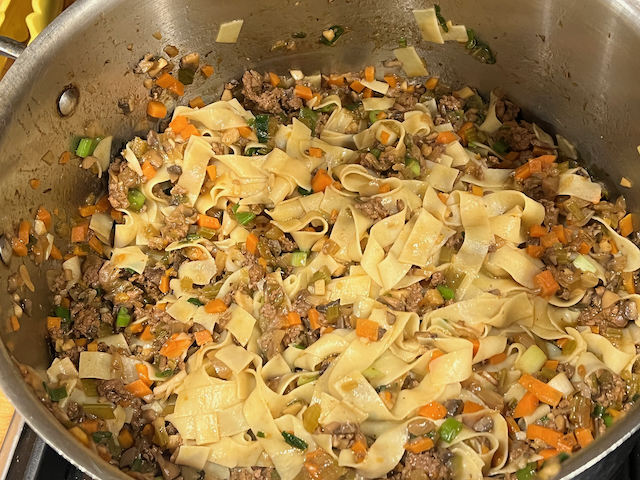
Korean Bulgogi Bolognese


Korean Bulgogi Bolognese was a new dish for us. It tasted just like the title implies: a mixture of Korean flavors in an Italian inspired dish. It ultimately to me was a compromise, neither Italian or Korean. Although I liked the dish, I prefer dishes that are more closely aligned with their origin.
 

Korean Bulgogi Bolognese

New York Times


In this recipe, Korean grilled barbecue meets Bolognese, the classic Italian meat sauce. Ground beef is simmered in a sauce that starts with a traditional base of sautéed onion, carrots and celery, to which scallions, garlic, ginger and soy sauce are added. As the sauce cooks, the flavors of the tomato paste and soy sauce meld, creating a deeply salty-sweet mixture, while the addition of chopped mushrooms provides depth and complexity. Be sure to use egg pasta here as the richness contrasts nicely with the sauce.


Ingredients


2       tablespoons safflower or canola oil

1       cup finely chopped onion

1       cup finely chopped carrot

1       cup finely chopped celery

7       garlic cloves, minced

2       tablespoons peeled, minced ginger

2       tablespoons tomato paste

1       pound ground beef

4       ounces white button mushrooms, finely chopped (about 2 cups)

¾      cup finely chopped scallions

¾      cup low-sodium soy sauce

¼      cup turbinado sugar

Kosher salt and black pepper

12     ounces dried egg pasta (tagliatelle or pappardelle)

Freshly grated Parmesan, for serving


Preparation


1.            Heat oil in a large Dutch oven over medium heat. Add onion and cook, stirring, until softened, 3 minutes. Add carrot and celery and cook for 5 minutes. Stir in garlic, ginger and tomato paste and cook until caramelized, 2 to 3 minutes, lowering the heat as necessary to avoid burning. Return heat to medium.

2.            Add beef, mushrooms and 1/2 cup of the scallions and cook, stirring to break up the beef, until beef is browned, 3 to 4 minutes. Add soy sauce, sugar and 1/4 cup of water and bring to a simmer. Cover and simmer gently over low heat, stirring occasionally, until sauce has thickened, 30 minutes. Stir in remaining 1/4 cup scallions and season with pepper.

3.            As sauce cooks, make the pasta: Bring a large pot of well-salted water to boil. Cook pasta according to package directions until al dente. Drain.

4.            Divide pasta in bowls and top with Bolognese. Serve with Parmesan.

Tuesday, January 25, 2022

Butter Chicken


Butter Chicken using Tikka Massala is a goto Indian inspired dish. Hopefully when the Pandemic is finally over we will be able to travel to India again. You can find the recipe for this classic dish on our blog of: November 12, 2021. Click the date to get the recipe. We started with a Speck and Persimmon Salad. Making this a very international but good dinner.

Friday, January 21, 2022

Shu Mei Burgers and Unami Garlic Noodles


We love to make Shumon Mei Burgers. We have made them many times. You can find the recipe on our blog of: June 30, 2010. Click the date to get the recipe.  This time we purchased Red Shrimp from Four Star Seafood in San Francisco. They were great. In addition we added Shrimp that we purchased at McCall's Meat and Fish. We appreciated that Larry deveined them for us!

Thursday, January 20, 2022

Dungeness Crab

Beautiful Crabs


We made Dungeness Crab from San Francisco for the 2nd time this winter. Cathy found a great Vinaigrette to go with the salad. Highly recommend it. You can read about Dungeness Crab on our blog of: December 8, 2021. Click the date to get the recipe.


The Best Lemon Vinaigrette


Allrecipes


This is one of my favorite salad dressings. It works for a simple salad or with crispy Parmesan chicken with a cool salad on top.


Ingredients


¼      cup red wine vinegar 

2       tablespoons Dijon mustard 

1       teaspoon dried oregano 

1       clove garlic, minced 

½      teaspoon kosher salt 

¼      teaspoon ground black pepper 

½      cup olive oil 

2       tablespoons fresh lemon juice  


Directions


1.            Whisk red wine vinegar, Dijon mustard, oregano, garlic, salt, and black pepper together in a small bowl. Slowly stream olive oil into the vinegar mixture while whisking briskly. Beat lemon juice into the mixture.


2.            Pour dressing into a sealable jar or bottle, seal, and shake until emulsified.


Wednesday, January 19, 2022

Farro and Mushroom Gratin with Smoked Pork Chops


We had frozen Nueske's Smoked Pork Chops. We finally decided it was time to eat them. Cathy found this recipe for Farro and Mushroom Gratin in The New York Times. Cathy enhanced the recipe by adding Espelette Pepper and Parmesan Cheese. To say we loved the Farro and Mushroom Gratin is understating how good it is. It is fantastic. Can't wait to make it again. It reminds me of the best Turkey Stuffing ever. It is a great dish.


Farro and Mushroom Gratin

New York Times


In this elegant gratin, nutty farro and earthy mushrooms are baked with herbs and mascarpone into a creamy casserole topped with Gruyère. It’s a rich, meatless meal that needs nothing more than a crisp green salad to round it out, though it’s also a satisfying side dish alongside roast chicken or fish. You can prepare the entire gratin earlier in the day (leave it at room temperature), then bake it just before serving — simply add a little extra time to ensure that it emerges from the oven steaming hot through and through. Note that if you’re using tangy crème fraîche instead of mascarpone, you may not need the lemon. Taste before squeezing.


Ingredients


Salt and black pepper

1½         cups pearled or semi-pearled farro

6             tablespoons extra-virgin olive oil, plus more as needed

1             pound mixed mushrooms (such as oyster, maitake, portobello, shiitake or cremini), cut into 1 1/2-inch pieces

6 to 8     fresh thyme sprigs

1             cup thinly sliced shallots, leeks or onion

1             cup mascarpone or crème fraîche

1             cup chopped parsley leaves and tender stems, chives, mint or cilantro

8             ounces shredded Gruyère (about 1 2/3 cups)

Lemon wedges, for serving (optional)


Preparation


1.            Heat oven to 425 degrees. Bring a medium pot of well-salted water to a boil over high heat.

2.            Add farro to the pot, and cook according to package directions until tender (which should be about 20 to 30 minutes). Drain well in a colander. While still warm (and leaving the farro in the colander, if you like), drizzle the grains with enough olive oil to coat lightly, tossing well to prevent from sticking. Set aside.

3.            While farro is cooking, prepare the mushrooms: In a large ovenproof skillet, heat 3 tablespoons of the oil over medium-high until hot but not smoking. Add enough of the mushrooms to cover the skillet in one layer without crowding and half the thyme. Cook, undisturbed, until bottoms of the mushrooms are golden brown, 3 to 5 minutes. Stir and let brown on the other side, 2 to 3 minutes more. Use a slotted spoon to transfer mushrooms and thyme to a plate, and season with salt and pepper. Add another 2 tablespoons oil to the pan and repeat with another layer of mushrooms and thyme, adding them to the plate when done. Repeat with any more mushrooms if necessary.

4.            Add remaining 1 tablespoon oil to skillet and stir in shallots and a large pinch of salt and pepper. Sauté until tender and golden brown, 4 to 6 minutes.

5.            Remove skillet from heat and return mushrooms to the pan (discarding the thyme sprigs). Stir in farro, mascarpone and 3/4 cup parsley. Taste and add more salt and pepper, if needed. Spread mixture evenly in the skillet and sprinkle Gruyère on top. Bake until the farro is hot and Gruyère is melted, 10 to 15 minutes. Turn on broiler and broil for 1 to 2 minutes until Gruyère starts to bubble and develop brown spots.

6.            Sprinkle with remaining parsley and serve with lemon wedges for squeezing on top, if you’d like.

Monday, January 17, 2022

Roast Chicken Cauliflower Soup


Chicken, Cabbage, Bacon before roasting

Chicken, Cabbage, Bacon after roasting


German Spaetzle Noodles


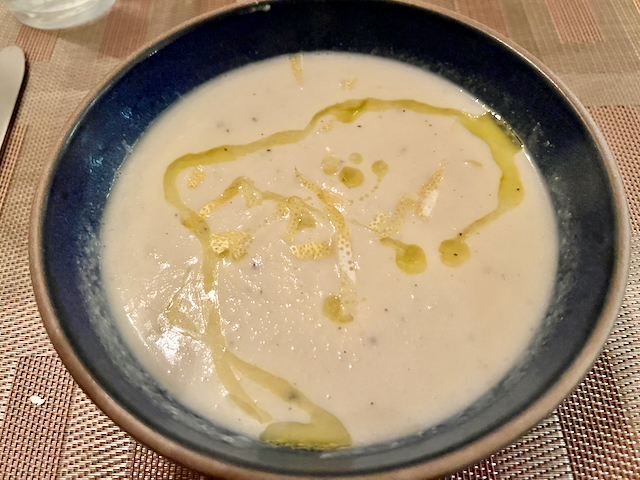
We made two new dishes for dinner: Creamy Cauliflower Soup with Rosemary Olive Oil and 
Roasted Chicken with Caramelized Cabbage.

Both of these recipes turned out great. The soup was so Creamy you would swear there was a ton of Cream in it. There is none! It is a rich delicious soup.

Bacon of course is my favorite seasoning. I love Roasted Chicken, so this recipe for Roasted Chicken with Caramelized Cabbage has it all. The dry rub on the Chicken is what makes it so good. With the Chicken we served German Spaetzle Noodles.

Creamy Cauliflower Soup With Rosemary Olive Oil

New York Times


This soup turns a short list of vegan ingredients into a sublimely silky soup. Infusing olive oil with fresh rosemary is a trick you’ll want to keep up your sleeve: The results are delicious brushed on roast chicken, drizzled over roasted winter vegetables or even just sopped up with a nice piece of bread. The croutons here are optional, but they transform an elegant and delicate first-course soup into a satisfying lunch.


Ingredients


For The Rosemary Oil:


1       cup olive oil

4       (4-inch) sprigs fresh rosemary


For The Soup:


2       tablespoons olive oil

1       medium yellow onion, chopped (about 1 cup)

2       garlic cloves, minced (about 1 tablespoon)

1       quart low-sodium vegetable stock, plus more as needed for reheating

1       medium head cauliflower, cored and broken into 1 1/2-inch florets (about 2 1/2 pounds)

2       teaspoons kosher salt, plus more to taste

1       teaspoon black pepper, plus more to taste

Freshly grated zest of 1 lemon, for serving


For The Croutons (Optional):


3       cups diced rustic country bread (3/4-inch pieces)


Preparation


1.            Make the rosemary oil: In a medium skillet, combine the olive oil and rosemary sprigs. Cook over low heat for 5 minutes, lowering the heat if the oil reaches a full simmer. (You want to cook it at a very gentle simmer to avoid frying the rosemary.) Carefully pour the oil and rosemary into a small bowl, leaving a slick of oil in the pan if you plan to make croutons. Allow the rosemary to cool completely in the oil while you make the soup.

2.            Make the soup: In a heavy pot or Dutch oven, heat 2 tablespoons olive oil over medium-low. Add the onion and cook, stirring occasionally, until tender and translucent, 6 to 8 minutes. Add the garlic and cook until fragrant, about 30 seconds. (Be careful not to let the garlic scorch!)

3.            Add the stock, cauliflower, salt and pepper, and bring to a boil over high. Lower the heat, cover, and simmer until the cauliflower is tender when pierced with a fork, about 10 minutes.

4.            Meanwhile, make the optional croutons: Heat the reserved skillet with the residual rosemary oil over medium. Add the bread cubes, sprinkle generously with salt and pepper, and cook, tossing often, until toasted all over, 4 to 5 minutes. Transfer the croutons to a plate or board to cool.

5.            Strain and discard the rosemary stems from the rosemary oil. Working in batches if necessary, carefully transfer the vegetables, stock and 1/4 cup rosemary oil to a blender and blend on high until creamy. Add more rosemary oil to taste, and blend to combine. Return the soup to the pot and bring to a simmer. If the soup seems thin, let it simmer for 5 to 10 minutes to reduce slightly. (Remember: The soup will continue to thicken as it cools.) Season to taste with salt and pepper.

6.            Serve hot. Garnish each serving with a swirl of rosemary oil, a few croutons, and a sprinkle of lemon zest. The soup will thicken as it sits; add more stock as necessary when reheating. Leftover rosemary oil will keep in a sealed container at room temperature for up to 1 week. 


Roasted Chicken With Caramelized Cabbage

New York Times

YIELD       4 servings

TIME         1 hour 20 minutes, plus 1 hour brining


Chicken roasted on a sheet pan develops gloriously crispy skin thanks to the increased hot airflow from the oven that passes over it. The extra space on the pan holds cabbage and onions, which roast around the chicken and soak up its juices while caramelizing. Fennel seeds, which are often found in sausage, lend their wonderful anise flavor to the dry brine on the bird and to the schmaltzy vegetables. If you can, dry-brine the chicken overnight for the most flavor and juiciness. Be sure to save the carcass to turn into stock later.


Ingredients


Kosher salt and freshly ground black pepper

2        teaspoons fennel seeds

1        tablespoon packed dark brown sugar

1        whole (3- to 4-pound) chicken

2-½   pounds green cabbage (about 1 large head), cored and cut into 1-inch pieces

1        large yellow onion, halved and thinly sliced

5        tablespoons olive oil

1        tablespoon sherry vinegar


Preparation


1.            In a small dish, stir together 1 1/2 tablespoons Diamond Crystal kosher salt or 1 tablespoon Morton’s coarse kosher salt, 1 teaspoon black pepper, 1 teaspoon fennel seeds and the brown sugar.

2.            Place the chicken on a large plate or sheet pan and, with a paper towel, pat the surface of the chicken as dry as you can. Remove any giblets from the cavity and reserve for another time. Sprinkle a third of the spice mixture into the cavity of the chicken, focusing especially on the underside of the breasts. Use your hands to really rub the spices into the cavity. Now, sprinkle the rest of the spice mixture all over the surface of the chicken, including the bottom but especially the top, where the breasts are, and again, really rub it into the skin. If roasting right away, let the chicken sit at room temperature for at least 1 hour. Alternatively, you can place the chicken, uncovered, in the refrigerator to dry-brine for up to 24 hours; just be sure to let it sit out at room temperature for at least 1 hour before roasting.

3.            While the chicken is coming to room temperature, position a rack on the bottom third of the oven and heat the oven to 425 degrees. On a large sheet pan, add the cabbage, onion, 4 tablespoons olive oil and the remaining 1 teaspoon fennel seeds. Season generously with salt and pepper, and toss until evenly combined. Push the cabbage and onions to the edges of the pan to make room for the chicken, and place the chicken in the center of the pan, breast side up; the chicken should have direct contact with the pan and not be sitting over any of the vegetables. Massage the remaining 1 tablespoon olive oil onto the chicken and give it a final generous sprinkling of salt and pepper (going lighter on the seasoning the longer the chicken has been dry-brined).

4.            Roast the chicken, rotating the pan halfway through, until the skin is golden brown and crispy, and the thigh meat reaches 160 degrees on an instant-read thermometer (it will continue to cook as it rests), 40 to 55 minutes or 13 minutes per pound. Do not cut into it to check that the juices run clear. The cabbage and onions should be soft and slightly charred in spots.

5.            Let the chicken rest for at least 15 minutes on the pan before transferring to a cutting board and carving into portions. Don’t forget to turn the carcass over and eat the two “oysters” on the bottom of the chicken where the back of the thighs meet the spine. It’s arguably the best part of the roast chicken experience, and the chef’s treat.

6.            Add the vinegar to the cabbage and onions, toss until evenly distributed and taste for seasoning, adjusting with salt and pepper. Serve alongside the chicken.


Thursday, January 13, 2022

Stir-Fried Green Beans With Pork and Chiles


Stir-Fried Green Beans With Pork and Chiles is a favorite of ours, we make it often. The key is to purchase really good fatty Pork! Highly recommend this dish if for some reason you haven't made it yet! You can find the recipe on our blog of: Feb. 9, 2018. Click the date to get the recipe.