Wednesday, October 26, 2011

Moroccan Night


Billy was travelling and we wanted to make sure that Kevin was not lonely so we invited him over for dinner. We also invited Tim. We made a fantastic soup from the new Paula Wolfert Cookbook: The Foods of Morocco, Butternut Squash And Tomato Soup. It was thick, and rich and spicy. You control the heat by the amount of harrisa that you add. The sprinkling of the smoked Gouda Cheese gives it a multi-layered taste. It was a big hit.

We followed that with a Beef Tagine With Roasted Cauliflower from the same cookbook. It was great. Nate at McCall’s told us a great chef’s trick when braising short-ribs. We would have cut the ribs apart into 2 inch chunks before braising. He suggested not cutting the meat and braising the entire short rib. That way the meat doesn’t fall off the bone. Good trick. We served it with couscous from Tunisia. The Tangine was wonderful.

We had a Savory Tart from Proof Bakery and also purchased a great Cake from them for dessert.

We spent lots of the dinnertime video conferencing with Billy in Thailand. It is amazing that you can have a virtual guest. The good news is they don’t drink a lot of your wine.


BUTTERNUT SQUASH AND TOMATO SOUP
The Foods of Morocco
Paula Wolfert

Here is a family favorite inspired by the winter soups prepared in the Rif Mountains, soups that keep both body and soul warm, as Fatima, our housekeeper, liked to say.

1        yellow onion, coarsely chopped (l-3/4 cups)
Coarse salt
1-1/2 tablespoons extra virgin olive oil
2 pounds butternut, kabocha, or calabaza squash, halved, peeled, seeded, and cut into 1-1/2 inch chunks (about 6 cups)
2        tablespoons tomato paste
1 teaspoon La Kama Spice Mixture
½ cup heavy cream or creme frache'
¼ pound shredded or crumbled aged goat cheese or goat gouda
1 teaspoon or more to taste harissa paste (see Sources)
Salt and freshly ground black pepper

Toss the onion with 1 teaspoon coarse salt and the oil in a medium casserole, preferably earthenware or enameled cast iron, cover, and steam over medium-low heat until the onion is soft, about 10 minutes.

Add the squash, cover with a sheet of parchment paper and a lid, and steam for 20 minutes.

Add the Tomato paste, spices, and 4 cups hot water and bring to-a boil, then cook at a simmer until the squash is tender, about 20 minutes. Remove from the heat.

Transfer the soup in batches to a blender and puree until smooth; add the cream, three-quarters of the cheese, and the harissa to the last batch of soup and puree until velvety.

Return the soup to the pot and season with salt and pepper to taste. Ladle the soup into warm bowl and top each portion with a light sprinkling of the remaining cheese.


La Kama Spice Mixture
1 teaspoon each ground ginger and ground tumeric
1 teaspoon freshly ground white pepper
½ teaspoon ground cinnanmon
½ teaspoon cubeb pepper (optional)
A good pinch of grated nutmeg

Mix all together

Beef Tagine With Roasted Cauliflower
The Foods of Morocco
Paula Wolfert

Beef tagines can be very good indeed. After hours of slow simmering, the meat comes out buttery and soft, and the sauce acquires excellent flavor. The spicing in this dish follows the Marrakech style, while the particular preliminary browning of the meat is Tetuanese.

Serves 4 to 6

ROBUST MEAT TAGINES

These highly aromatic tagines, flavored with paprika and cumin, are sturdy dishes, nourishing and thick, especially good in winter—satisfying to weary travelers and men who have done hard physical work, or to folk who have just come off the ski slopes an hour outside Marrakech. Though they are not among the most elegant of dishes, these hearty stews are truly toothsome.

Coarse salt
½      teaspoon freshly ground black pepper
¼      teaspoon ground turmeric
5      tablespoons extra virgin olive oil
3      pounds beef short ribs or 2 pounds bone-in beef shoulder, trimmed of excess fat and cut into 1- to l!4-inch chunks
1      teaspoon sweet paprika
½      teaspoon ground ginger
½      teaspoon ground cumin, preferably Moroccan
1      medium white or red onion, grated
2      tablespoons finely chopped cilantro
2      tablespoons finely chopped flat-leaf parsley
One 2-pound cauliflower
Pinch of red pepper flakes or cayenne, or to taste
12 ounces Roma (plum) tomatoes, peeled, halved, seeded, and chopped
Juice of 1/2 lemon

Heat a tagine, preferably flameware, set on a heat diffuser over medium-low heat until warm. Mix 1 teaspoon salt, the pepper, and turmeric with 1-1/2 tablespoons of the olive oil and add to the warm pan.

Add the beef and saute gently until golden on all sides. Place a crumpled piece of parchment directly over the meat, cover tightly, and cook for 15 minutes, without lifting the cover. (The meat will cook in its own juices, drawn out by the salt over low heat; do not add water.)

Add the paprika, ginger, cumin, grated onion, half of the herbs, and lli cup water. Cover again with the parchment paper and the lid, and simmer gently for 3 hours, until the meat is very tender and has fallen off the bones.

Meanwhile, preheat the oven to 400°F.

Cut the cauliflower in half, then cut each half lengthwise into ½ inch-thick slices. Lightly brush a jelly-roll pan with 3 tablespoons of the olive oil. Mix the remaining 'A tablespoon oil with 1/2 teaspoon salt and a pinch of red pepper flakes and gently toss with the cauliflower. Spread the cauliflower out in one layer on the pan and roast for 15 minutes. Use a spatula to turn the slices over and roast for another 15 minutes, or until lightly caramelized. Remove from the oven, cover loosely with paper towels or a kitchen towel, and set aside.

Remove the meat from the tagine and remove and discard the bones. Return the meat to the tagine and lightly brown in the fatty juices. Tilt the pan and spoon off and discard the excess fat. If necessary, add a few tablespoons water to make a smooth sauce.

Scatter the cauliflower, tomatoes, and the remaining chopped herbs over the beef. Bring to a boil to reheat. Correct the seasoning with salt, black pepper, red pepper flakes, and the lemon juice, and serve at once.


Monday, October 17, 2011

Pork Braised with Milk and Two Types of Polenta


Pork with Polenta
The other Polenta

It is getting cool in Los Angeles and it was appropriate for us to cook one of our favorite pork recipes: Pork Braised in Milk from . If you have never made this dish, or if you are not a cook this is the dish for you! This is a no fail, easy, delicious, surprising dish.

Pork Braised in Milk and Polenta

This was one more dinner we made in the post holiday vacation. This is one of our all-time favorites. It was one of the first dishes that we jointly made, years ago. It sounds weird to braise pork in milk, but is an excellent preparation. The milk eventually boils off, creating a dark thick sauce as it combines with the pork drippings during cooking. The recipe we use is from Marcella Hazan: The Classic Italian Cookbook. Matt Molina who used to cook at Campanile, and now is the executive chief at Mozza, served it once and made an addition that we have incorporated. He added sautéed onions, garlic, lemon peel and sage to the recipe. It was a good addition to the recipe.

1. 2 tablespoons butter
2. 2 tablespoons vegetable oil
3. 2 pounds boneless pork loin, with some fat on it
4. 1 teaspoon salt
5. freshly group pepper
6. 2 ½ cups milk
7. 2 chopped onions sauted with chopped garlic and sage leaves and lemon peel

Use a casserole pan slightly larger then the pork. Heat the butter and oil and brown onions 1 or 2 chopped garlic cloves some fresh sage leaves and lemon peel. When golden remove from pan.

Add the pork and on a medium high heat braise on all sides till brown. Reduce the heat and slowly add the milk and salt and pepper. Bring to boil then reduce heat to medium and cover with lid slightly open. Cook 1 ½ to 2 hours turning the meat every 30 minutes. By the time the meat is cooked, the milk should have evaporated, leaving a brown nutty sauce. Remove the pork and add the onion and garlic to the sauce in the pan and heat.

Let the meat slightly cool, slice and serve with sauce.

We have always read about what is supposedly the best polenta in the world (other than our cat named Polenta). It is from Anson Mills in South Carolina. We finally bought several bags of the Polenta and this is the first time that we had used it. It is good, and has a rougher texture than the traditional Italian Polenta that we use. We recommend it. 

Friday, October 14, 2011

Chicken Moroccan Style


We made another dish from French Country Kitchen by James Villas. This is a dish that I don’t think we will repeat. I think we executed it correctly, and we loved the potatoes, but the chicken turns out to be between a boiled chicken and a stewed chicken. It was not very exciting or bright. Oh well, if we don’t try them you don’t find out. An interesting aspect is that when you cook a dish that you have never eaten, you really don't know if it is well executed and tastes as it should. You only know that if you like it or not. I actually would make the potatoes again. They were great.


Poulet a la Mentonnaise
French Country Kitchen
James Villas

Chicken with Mushrooms, Potatoes, and Olives

Like most travelers, for years I considered Menton little more than the last stop on the French Riviera before crossing the border into Italy, a charming but rather nondescript town whose major attraction was a lively Saturday market. One day, however, we were forced to garage the car for repairs to a bum clutch; when we ventured back into the Old Town, we lingered for almost two hours over this wonderful chicken ragout at a homey place on Square Victoria called La Calanque. What made the dish so glorious were the fresh herbs, but each time I asked Madame to specify which ones, she would simply shrug her shoulders and respond, "Herbes de Provence, Monsieur; tout simplement herbes de Provence."

5            strips bacon, cut into 1-inch pieces
¼            cup olive oil
3-1/2            pound chicken, cut into serving pieces
2            garlic cloves, chopped
¼            pound fresh mushrooms, cut in half
1            cup drained small black olives cured in brine, pitted
2            large ripe tomatoes, peeled and chopped
1 tablespoon chopped mixed fresh herbs (thyme, tarragon, rosemary, parsley)
¼ cup Cognac
salt and freshly ground pepper to taste
1            pound tiny new potatoes, unpeeled
2            teaspoons sugar

In a large casserole, fry the bacon until half cooked, pour off the grease, and add 2 tablespoons of the olive oil. Add the chicken and brown it over moderate heat on all sides. Add the garlic and mushrooms and cook for 2 minutes. Add the olives, tomatoes, herbs, Cognac, salt, and pepper. Stir, cover tightly, and simmer for 30 minutes.

Meanwhile, heat the remaining oil in a skillet, add the potatoes, and brown lightly on all sides over moderate heat. Add the potatoes to the chicken, cover, and continue cooking for 30 minutes or until the chicken and potatoes are tender. Transfer the solid contents of the pot to a heated serving platter, add sugar to the sauce, stir for 2 minutes, pour the sauce over the chicken and potatoes, and serve.


Saturday, October 08, 2011

Show me your Mussels Big Boy


Robert and Darryl combined forces with us for a dinner. We decided to make Cote De Boeuf. Nate at McCall's Meat and Fish convinced us that we should buy separate piece rather than one larger 2 bone steak. It was delicious. You can get the recipe from our blog of: Jan. 15, 2011. Click the date to get the recipe. It is one of the few steak recipes that are best roasted in the oven and not grilled outside.

We got a White Truffle from Italy from Palate Food and Wine, and we wanted to show it at its maximum flavor and intensity.

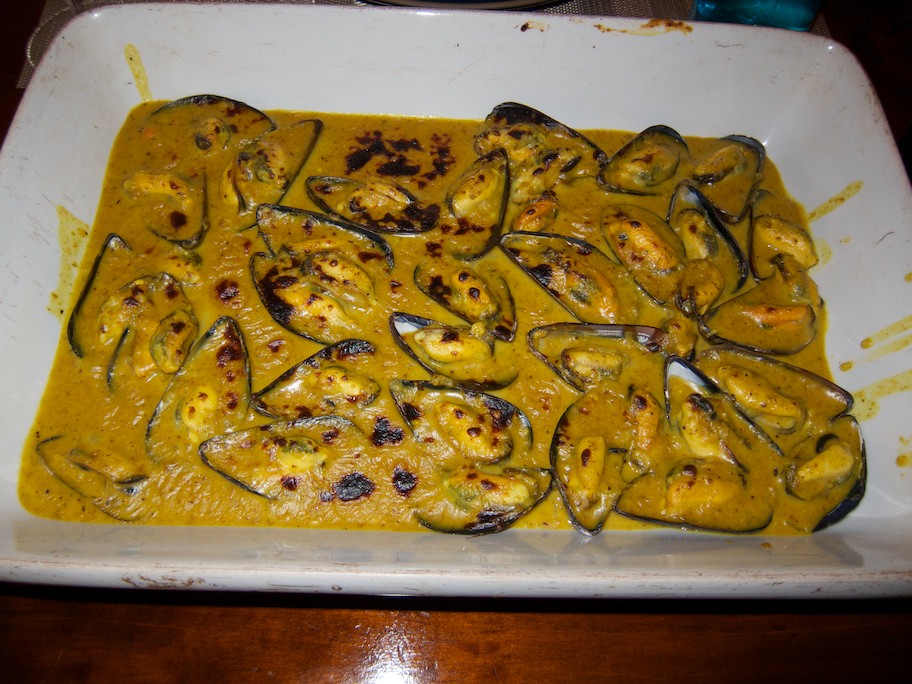
Robert and Darryl brought us two starters both made with mussles: a Mussel Salad and Baked Mussels. They both were delicious. It was great having them as appetizers. They not only were excellent, but they were dishes we wouldn’t make. They really have a knack for making mollusks.

With our meat we made Mashed Potatoes from a recipe that didn't work. Don't know why but it would seem like it would be difficult to botch mashed potatoes, but it happened. Both dishes were topped with Truffles Slices. The truffles compensated for the lack of consistency of the mashed potatoes!

For dessert another fantastic Cake from Proof! We are lucky to have such a good bakery so close to us.


Wednesday, October 05, 2011

Honey-glazed Pork Roast


We had left over lamb, so we started with a Lamb Salad. No recipe just sort of played with good salad ingredients and Feta Cheese.

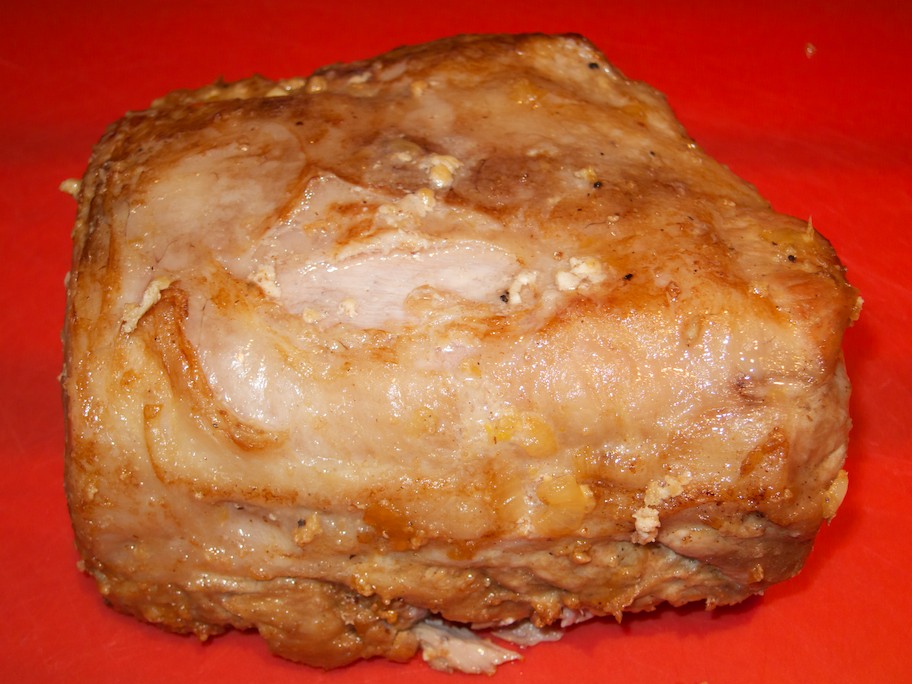
Our favorite Indian cookbook author: Suvir Saran, of Devi Restaurant has a cookbook of Indian American Indian inspired dishes. His cookbook is called: American MasalaWe love his New York Restaurant. On our recent trip to NYC we ate there. The cost for the dinner was $100 a person. This is not at all out of line for a top notch NYC restaurant. However, when we mentioned to our Indian and Bangladeshi friends we paid $100 each for Indian dinner, they couldn't believe it. They sort of said you could cater an Indian wedding for this back in India. We made Honey-glazed Pork Roast with Vegetable Confit. It is a good recipe. Lots of great leftovers. Of course we purchased the beautiful pork at McCall’s Meat and Fish. The Glaze made for a delicious crust! Our kind of food!

Honey-glazed Pork Roast with Vegetable Confit
American Masala
Suvir Saran

SERVES 8

1          center-cut pork loin roast, trimmed

FOR THE SPICE PASTE

1/3  cup extra-virgin olive oil
3     tablespoons honey
2     tablespoons balsamic vinegar
2     tablespoons finely chopped fresh thyme, or 1 tablespoon dried)
2     tablespoons finely chopped fresh rosemary, or 1 tablespoon dried)
1     tablespoon ground peppercorns
1     tablespoon plus 1 teaspoon kosher salt
½    teaspoon red pepper flakes

FOR THE VEGETABLES

1/3    cup plus 1 tablespoon extra-virgin olive oil
2    teaspoons balsamic vinegar
1    teaspoon finely chopped fresh thyme, or ½ teaspoon dried
1    tablespoon plus 1 teaspoon kosher salt
2    teaspoons ground peppercorns
4    large red potatoes, coarsely chopped
2    large red onions, halved, thickly sliced, and chopped crosswise
3    bell peppers, red and/or green, cored, seeded, thickly sliced, and chopped crosswise

Line a baking sheet with plastic wrap and place the pork roast on top. To make the spice paste, whisk ail of the ingredients together in a medium bowl, then rub into the pork roast, taking care to get in between the bones and meat. Cover the roast with plastic wrap and marinate for at least 1 hour, or up to overnight.

Preheat the oven to 450°F and grease a sturdy roasting pan and roasting rack with i tablespoon of the olive oil. Prepare the vegetables: In a large bowl whisk together the remaining 1/3 cup of olive oil, balsamic vinegar, thyme, salt, and ground peppercorns. Add the chopped vegetables and toss to coat. Remove the roast from the refrigerator, place it on the greased rack, and roast it for 30 minutes. Reduce the oven temperature to 350°F and remove the roasting pan from the oven. Drain all but 1 tablespoon of fat from the roasting pan and add the vegetables to the pan. Stir to coat with fat and place the roast fat side up over the vegetables. Roast for an additional 1-1/4 to 1-1/2 hours, or until a meaty part of the roast reaches 155°F. Cover the roast with aluminum foil and let it rest for 15 minutes (the pork's internal temperature will increase to 16o°F to 165°F). Carve and serve with the vegetables on the side.


Saturday, October 01, 2011

Devi Dinner Re-Created


When we were in New York last week, one of the best dinners that we had was at Devi. It is a wonderful Indian Restaurant.

We decided to make two of the dishes that we had that night with Ferris an Courtney. We started with a recipe that I had seen in the LA Times: Palomino Restaurant's tomato and feta relish. Using fresh heirloom tomatoes, it made a great bruschetta. I knew I would be grilling the lamb chops on our Weber, so that it would be easy to rub fresh bread with olive oil and garlic and also grill the bread.

We started with Roasted Manchurian Cauliflower, adapted from a Devi recipe. The Cauliflower that we had at the restaurant was deep fat fried with a crispy coasting. This version is baked, just as good, and healthier.

We then made Tandoori Lamb from a recipe that can be found in our blog of July 16, 2008. Click the date to get the recipe. With the dinner we served Garlic Tandoori Naan, which we purchased at Gelson's our neighborhood market.

It was an amazing warm night without wind, and after dinner we enjoyed drinking on the deck actually looking at stars in LA (the ones in the sky, not the acting types).


Palomino Restaurant's tomato and feta relish: Culinary SOS - latimes.com

Total time: 20 minutes plus chilling time

Servings: Makes about 3 cups relish

Note: Adapted from Palomino Restaurant in Westwood. The recipe can be made using fresh tomatoes. Substitute a generous pound (about 7) of plum tomatoes, peeled, seeded and crushed with juice.

1 (14-ounce) can whole tomatoes in juice, crushed by hand with juice
1/4 cup extra-virgin olive oil
1/2 teaspoon minced garlic
Pinch kosher salt
1 tablespoon julienned fresh basil
2 tablespoons pitted and coarsely chopped Kalamata olives (several olives)
1 tablespoon finely diced red onion
2 tablespoons crumbled feta cheese
2 tablespoons red wine vinegar
Sliced ciabatta, for serving

In a large bowl, stir together the crushed tomatoes, olive oil, garlic, salt, basil, chopped olives, onion, feta and red wine vinegar. Cover and refrigerate overnight to give the flavors time to marry. Stir again and taste, adjusting the seasonings and flavorings, if desired, before serving. Serve with sliced ciabatta bread.

Roasted Manchurian Cauliflower

This side dish has origins in Chinese cooking (hence the name) and is typically fried. This version roasts the cauliflower instead to intensify the flavor, and the spicy tomato-based sauce reduces with the vegetables. Serve with a simple cooked spinach side, a mild curry with potatoes and peas, and plenty of flatbread (naan) to scoop up the sweet-salty sauce.


            YIELD: 9 servings (serving size: about 1/3 cup)
            COURSE: Side Dishes/Vegetables
Ingredients
            5 1/2 cups cauliflower florets (about 1 large head)
            2 tablespoons Garam Masala
            1/4 teaspoon kosher salt
            2 teaspoons canola oil, divided
            Cooking spray
            1/2 teaspoon black pepper
            8 garlic cloves, minced
            3/4 cup ketchup
            1/2 teaspoon ground red pepper
Preparation
1. Preheat oven to 425°.
2. Combine first 3 ingredients and 1 teaspoon oil in a large bowl; toss well. Place cauliflower mixture in an 11 x 7–inch baking dish coated with cooking spray. Bake at 425° for 20 minutes.
3. Heat remaining 1 teaspoon oil in a medium nonstick skillet over medium-high heat. Add black pepper to pan, and sauté 1 minute. Add garlic; sauté for 30 seconds. Stir in ketchup; cook 2 minutes, stirring occasionally. Stir in red pepper; reduce heat, and simmer 3 minutes or until thick.
4. Remove cauliflower mixture from oven. Stir in ketchup mixture. Bake at 425° for an additional 20 minutes or until cauliflower is tender, stirring after 10 minutes.


Monday, September 19, 2011

It's Kosher!


Nancy Silverton and Matt Molina have a brand new cookbook called (naturally) The Mozza Cookbook. They had a wonderful event at the restaurant where they gave us a copy of the cookbook and served lots of food from recipes from the book. We asked Matt what was the first recipe we should make and he suggested: veal breast stracotto.

We called Nate at McCall’s Meat and Fish and tried to order a veal breast, however, he informed us he needs a weeks notice to get fresh veal. He highly recommended NOT getting frozen veal. I thought it would be easy to find fresh veal and called all of the major markets. None had fresh veal, only frozen. Finally from the recesses of mind, I sort of remembered that Kosher butchers would have fresh veal. I called one and he said they had it. On the internet I found one: Doheny Glatt Kosher Meat.

Since we were planning to go over to the west side of LA for a Doctor appointment, we decided to pick one up there. Oye, a new problem! It was Friday and of course a Kosher butcher shop closes early, so they can be home before Sunset. We prepared to dash over and then received a call from Robert, he was independently of us planning a veal dinner and he could not get fresh veal. Nate must of told him we were in the same boat. He called us, and we volunteered to pick up his meat.

When we arrived at the butcher shop, the first person we talked to tried to sell us frozen veal. I was devastated we had driven all the way over and now they didn’t have fresh veal. What a bummer. I said I had talked them over the phone and they said they had fresh meat. He told me to speak to the owner. Easier said than done. I had never been there before and had no idea who the owner was. Meanwhile the clock was ticking towards their closing and Cathy’s Doctor appointment time. Finally a man said, he remembered the call and would get us fresh veal. He made a phone call and a few minutes later a man walked into the butcher shop with a half of veal slung over his shoulder. They then carved out a beautiful breast for us. He did say that if we only wanted 9 pounds he wouldn’t have gotten the veal. Oh well. Now I know where and when (not late Friday afternoon) to get fresh veal.

This was a dinner that kept on giving! The original serving of meat and Vegetables were delicious, but a little salty for my taste. Cathy figured out how to dilute the saltiness. We shredded the meat and used it to make a Bolognese Pasta sauce. We used the recipe for Garganelli with Veal Ragu On Top of Spaghetti by Johanne Killeen and George Germon. This is an excellent ragu recipe. You can find the recipe in our blog of: Feb. 28, 2011. Click the date to get the recipe. We still had pasta left over! We then converted it to a Baked Pasta, by mixing fresh Burrata Cheese and topping with Parmesan Cheese.This expensive veal gave us a lot of dinners. As I am writing this we still have leftover baked Pasta and plan to eat it tomorrow night!

We started with: Tricolore With Parmigiano-Reggiano And Anchovy Dressing from the same Mozza Cookbook. This is a great recipe and tought me we could make Caesar Salad Dressing in the Magimix!


veal breast stracotto
The Mozza Cookbook
Nancy Silverton

One of my favorite daytrips from my house in Italy is to the town of Panzano in Chianti, to visit the world-famous butcher Dario Cecchini. Dario has been covered by every food publication imaginable, and since Bill Buford wrote about him in his memoir, Heat, Dario's shop has become a mecca for foodies traveling in Italy. To meet the demand of his fans, Dario now has three restaurants that people can visit while they're there: a steakhouse serving prime cuts, such as bistecca fiorentina, a classic prepara­tion of a T-bone or porterhouse grilled over a wood fire; a hamburger restau­rant, Dario Plus; and my favorite of the three, Solo Ciccia. This restaurant, whose name means "only meat," offers lesser cuts of meats prepared in a variety of ways, many of them cooked long and slow, or stracotto, like this dish. Veal breast isn 't something you '11 find at your average grocery store, so you '11 have to get it from a butcher, and you will probably have to special-order it. Ask the butcher to save the bones he carved the breast from, as you '11 use those to make the stock in which the meat is braised. While you 're at it, have him roll and tie the breast for you, too. Even though this might be out of your ordinary shopping routine, the good news is that you'll end up with a rich, luxurious veal dish for not a lot of money.

for seasoning the veal

1 4-pound boneless veal breast, bones reserved
1 tablespoon plus 1 teaspoon kosher salt
1 teaspoon freshly ground black pepper

for the veal stock (optional)

8 cups Basic Chicken Stock
1 leek, cleaned thoroughly and roughly chopped into 1-inch pieces
1 large Spanish onion, roughly chopped into 1-inch pieces '
1 carrot, peeled and roughly chopped into 1-inch pieces

for braising the veal

1/2 cup plus 2 tablespoons extra-virgin olive oil
1/4 pound prosciutto, ground or finely chopped
2 celery ribs, finely diced (about 1 cup)
1 large carrot, peeled and finely diced Half of a large Spanish onion, finely diced
1/2 teaspoon freshly ground black pepper
3 garlic cloves, thinly sliced
2 tablespoons double-concentrated tomato paste
1 750-ml. bottle dry white wine 1 quart veal stock or Basic Chicken Stock , warmed if gelatinous
4 turnips, halved or quartered depending on their size, or 8 baby turnips (about 2 pounds), or whole unpeeled baby carrots with 1-inch greens attached

for the garnish

3/4 cup whole fresh Italian parsley leaves
3/4 cup whole fresh celery
leaves (only pale green leaves from the hearts)
Zested strips of 3 lemons
1 tablespoon finishing-quality extra-virgin olive oil
Maldon sea salt or another flaky sea salt, such as fleur de sel


To season the veal, place the breast in a nonreactive baking
dish and season it all over with the salt and pepper, using approximately 1 teaspoon of salt per pound of meat. If your butcher did not roll and tie the veal breast, roll it tightly lengthwise into a long log shape and tie it with kitchen twine in five or six places along the roll. Cover the dish tightly with plastic wrap and refrigerate for at least I hour and up to overnight.

Meanwhile, if you are making the stock, adjust the oven rack to the middle position and preheat the oven to 325°F.

Place the veal bones on a baking sheet and roast them, shaking the pan occasionally for even cooking, until they're evenly browned, about 1-1/2 hours. Remove the baking sheet from the oven and transfer the bones to a large stockpot. Add the chicken stock and bring it to a boil over high heat, skimming off the foam that rises to the top. Add the leek, onion, and carrot, reduce the heat, and simmer the stock for 1 hour, skimming as needed. Remove the stock from the heat, pour it through a fine-mesh strainer, and discard the contents of the strainer. Use the stock, or set aside to cool to room temperature, transfer it to an airtight container and refrigerate for up to three days.
To braise the veal, adjust the oven rack to the middle position and preheat the oven to 350°F.

Cut the veal in half, if necessary, for it to fit in the pan. Heat 1/4 cup of the oil over medium-high heat in a large Dutch oven or large, high-sided saute pan until the oil is almost smoking and slides easily in the pan, 2 to 3 minutes. Place the veal in the pan to sear to deep brown on all sides, 10 to 15 minutes. Remove the veal to a plate.

Add 2 tablespoons of the remaining olive oil to the pan. Reduce the heat to medium low, add the prosciutto, and cook, stirring constantly, to render the fat but not to brown the prosciutto, 2 to 3 minutes. Increase the heat to medium, add the remaining ¼ cup of olive oil, and warm the oil for a minute or two before adding the celery, carrot, and onion. Season the vegetables with the pepper, and saute until the veg­etables are softened and slightly caramelized, 10 to 15 minutes. Add the garlic and saute for 1 minute, stirring constantly to prevent it from browning. Move the vegetables to create a bare spot in the pan, add the tomato paste to that spot, and cook for 1 minute more, stirring, to caramelize the tomato paste slightly. Add the wine, increase the heat to high, and boil until it reduces by about half, about 5 minutes. Return the veal and any juices that have collected on the plate it was resting on to the pan. Pour in enough stock to come half to three-fourths of up the veal breast, about 4 cups. Increase the heat to medium high and bring the stock to a simmer. Turn off the heat. If you have industrial-strength plastic wrap, which won't melt in the oven, cover the Dutch oven or pan tightly with plastic wrap. In either case, cover tightly with aluminum foil and place the lid on if it has one. Place the veal in the oven for 2 hours. Remove the pot from the oven and uncover it. Add the turnips, nestling them in the sauce, return the lid to the pot, and place it back in the oven for about 1 hour, until the meat is fork-tender and the vegetables are tender. Remove the veal from the oven and remove and discard the foil and plastic wrap (if you used it) from the pan, being careful not to burn yourself with the steam that will rise from the pan. Allow the meat to cool in the braising liquid for at least 30 minutes. You can prepare the veal to this point up to five days in advance. Cool the meat and turnips to room temperature in the braising liquid. Remove the vegetables and transfer them to an airtight container. Cover the pot with plastic or transfer the veal with the liquid to an airtight container and refrigerate until you are ready to serve it. (You will proceed slightly differently.) If you have prepared the veal in advance and are rewarming it, preheat the oven to 350°F. Remove the veal and turnips from the refriger­ator. Remove and discard the fat from the liquid and pour it into a large Dutch oven or stovetop-safe baking dish and cook as directed below to thicken. Remove the string and slice the veal as directed below and lay the slices in the sauce, resting them on top of one another, domino fashion. Nestle the turnips around the veal and place the dish in the oven for about 30 minutes, basting the vegetables and the veal with the sauce occasionally, until the meat is warmed through.
I
f you are serving the dish the same day, remove the veal and turnips to a plate, skim the fat from the braising liquid, and bring the liquid to a boil over high heat. Reduce the heat and simmer the liquid until it is the consistency of a thick glaze or thin gravy, stirring occa­sionally to prevent it from sticking to the pan; it will be thick enough to coat the back of a spoon.
To make the garnish, combine the parsley leaves, celery leaves, and lemon zest in a medium bowl. Drizzle the leaves with the finishing-quality olive oil, sprinkle with sea salt, and toss gently to combine.
To serve, cut off and discard the string from the veal and cut it into eight slices of even thickness. Lay two slices of veal on each of four plates, resting one at an angle on top of the other. Nestle the turnips around the veal, dividing them evenly, and ladle the sauce over the meat. Pile the garnish on each serving, dividing it evenly, and serve.

Tricolore With Parmigiano-Reggiano And Anchovy Dressing
The Mozza Cookbook
Nancy Silverton Matt Molina

for the dressing
5              anchovy fillets (preferably salt-packed), rinsed and backbones removed if salt-packed
1-1/2       tablespoons red wine vinegar
1       tablespoon fresh lemon juice, plus more to taste
1       large garlic clove, finely chopped
½       teaspoon kosher salt, plus more to taste
¼       teaspoon freshly ground black pepper, plus more to taste
½       cup extra-virgin olive oil
for the salad
3       large heads red Belgian endive, or 1 large head radicchio leaves, leaves torn into large pieces
3       large heads frisee
6              cups loosely packed arugula (preferably wild arugula)
Kosher salt
¼ cup + 3       tablespoons
freshly grated Parmigiano-Reggiano


The red, green and white tricolore salad, traditionally composed of radicchio, frisee, and endive, is just one of the many ways that Italians celebrate their flag. I like tricolore salads, but this version, which is tossed in an anchovy-enhanced dressing with lots of grated Parmigiano-Reggiano, was my way of sneaking the flavors of a Caesar salad onto the Pizzeria menu without calling it a Caesar. In the rare instance that a Caesar salad is done well, it is one of my favorite salads, but Caesar salad is such a cliché on Italian-American menus—and it's not even Italian; it was invented in Tijuana—I could never have put it on my menu as such.
Serves 4 as a Starter or 2 as a Main Course

To make the dressing, combine the anchovies, vinegar, lemon juice, garlic, salt, and pepper in the bowl of a food processor fitted with a metal blade or the jar of a blender and puree. With the motor running, add the olive oil in a steady stream through the feed tube to create an emulsion. Turn off the machine, taste for seasoning, and add more salt, pepper, or lemon juice, if desired. Use the dressing or transfer it to an airtight container and refrigerate for up to three days. Bring the dressing to room temperature, whisk to recombine the ingredients, and taste again for seasoning before using.

To prepare the salad, discard any brown or unappealing outer leaves from the endive and frisee. Pull the leaves away from the cores, putting them in a large, wide bowl, and discard the cores. Add the arugula, sprinkle with salt, and toss gently to combine the lettuces and distribute the salt evenly. Drizzle 1/2 cup of the dressing, sprinkle with 1/4 cup of the Parmigiano-Reggiano, and toss gently to coat the lettuce leaves with the dressing. Taste for seasoning and add more salt or dressing, if desired.

Pile the salad on a large plate or divide it among four individual plates. Sprinkle with the remaining 3 tablespoons of the Parmigiano-Reggiano and serve.


Thursday, September 15, 2011

Lentil Pasta


In the summer when tomatoes were at their best we made several batches of Oven Candied Summer Tomatoes from: The Italian Country Table by Lynne Rossetto Kasper. We then froze the tomatoes for use in the winter when delicious tomatoes are hard to come by.

We used the frozen tomatles for our main course: Lentil Pasta. The Italian Lentil Pasta from the restaurant Locanda Veneta in Los Angeles is one of the best. It is so rich, you would swear it was made with meat. You can get the recipe from our blog of: July 22, 2008. Click the date to get the recipes for both the pasta and the tomatoes.

I can’t say enough about Lentil Pasta! It is one of our favorites and we have made it many, many times. It is a vegetarian dish that tastes like it has a meat sauce. But that isn’t the secret. The secret is it is DELICIOUS! Try it.

 We served a simple salad of Tomatoes, Burrata Cheese, Olive Oil, Fresh Herbs, Olives. It was a  perfect accompaniment to the pasta.

Monday, September 12, 2011

Crab Salad and Bangladesh


We invited Shu over for dinner. We had a can of Crab meat that we had purchased from McCall’s Meat and Fish. Previously the crab was from Indonesia. They now are canning good old American Blue Crab. We decided to make a Crab Louie.

We knew immediately that we would be using Mark Peel’s recipe for Russian Dressing from his cookbook: New Classic Family Dinners. It is the best Russian Dressing! You can find the recipe on our blog of: July 4, 2010. Click the date to get the recipe. The way that we assembled the salad was also from a Mark Peel recipe in the same cookbook: Shrimp Louie replacing the shrimp with crab. You can find the recipe in our blog of: August 19, 2010. Click the date to get the recipe. Thank you Mark!

Shu had discovered a new Bangeldeshi Restaurant: Meghna Restaurant on 3rd Street and Hobart Ave. and he wanted to bring us a first course. The dish is called Parata, we had never had it before. It was delicious.