Friday, December 17, 2010

Lamb, Gratin and a Stinky Cheese

Our Favorite Cabbage Salad


The Best Gratin Ever!

A Delicious Plate!

Stinky Epoisse Cheese: 5 Yes Votes, 1 No Vote

Darryl: The Baker
The Apple Cake


We decided to cook a big dinner for Barbara. There were many great wines drunk at this dinner, check the photo!

We started out with a our favorite Cabbage Salad it is from The Cuisine of California Cookbook and is a Sauteed Red Cabbage Salad With Pancetta And Broiled - Goat Cheese. I really like this salad. We purchased delicious goat cheese and the required pancetta at The Cheese Store of Silverlake.

For the main course we made a fantastic Smoked Leg of Lamb that we purchased at McCall’s Meat and Fish. This is a fun and dramatic recipe to make. First you need a lot of Rosemary. Luckily we have a backyard filled with it, so I went harvesting. After the lamb is browned and cooked in the oven the roasting pan is taken outside and the rosemary is ignited. It produces a LOT of smoke. The roasting pan is then covered and the Smokey flavor infuses the meat. It is quite dramatic to make! The recipe is from Mark Peel and Nancy Silverton at Home.

Be sure to watch the movie by clicking the clip below.


There is NO question in our mind that the Absolute Best Gratin ever is from a recipe from the Sunday Suppers at Lucques Cookbook called: Potato – Bacon Gratin. Bacon is my FAVORITE Seasoning. The recipe can be found in our blog of July, 8, 2008. Click the date to get the recipe.

I continued to experiment baking bread. I modified the recipe to contain 16% whole wheat. It was a good enhancement to the recipe and I will continue to play with the recipe. Robert and Darryl brought a very stinky Epoisse Cheese that went well with the bread.

Darryl brought an Olive Oil Cake that was delicious.
With all of the wine none of us suffered the next morning! We drank lots of water, which helps.

Sauteed Red Cabbage Salad With Pancetta And Broiled - Goat Cheese
The Cuisine of California
Diane Rossen Worthington

Serves 4

This is a delicious variation on warm spinach salad that uses year-round red cabbage to advantage with crispy pancetta and goat cheese. The goat cheese is lightly breaded and then broiled just enough to melt, and to lightly toast the breadcrumbs for added crunch. I like to serve it as a main course for lunch with warm sourdough bread or as a first course with Lemon-Herb Chicken and steamed zucchini and carrots.

RECOMMENDED CALIFORNIA WINES: This can be served equally well with white or red wine. A big Napa or Sonoma Chardonnay melds the goat cheese and sherry vinegar flavors; the goat cheese will reduce the seemingly exces­sive tannin of a full-bodied Cabernet Sauvignon.

½     pound pancetta, sliced 6 ounces Sonoma goat cheese or French goat cheese
½     cup olive oil
2     tablespoons French bread or whole wheat breadcrumbs
1     small red cabbage, cored and thinly sliced or shredded
2     large shallots, finely chopped
3     tablespoons sherry vinegar
¼     teaspoon salt
1/8     teaspoon coarsely cracked pepper

1.   In medium skillet cook pancetta over medium-low heat until crisp and lightly browned. Remove and place on paper towels to drain. Grumble into small pieces and reserve.

2.   Slice goat cheese into 4 equal portions. Place on broiler pan and brush each piece with 1 tablespoon olive oil. Sprinkle with breadcrumbs so that they adhere to the cheese. Refrigerate for 1 hour.

3.   Remove all but 1 tablespoon of pancetta drippings and add 3 tablespoons olive oil to skillet. Add cabbage and sauté until it begins to wilt. Remove to a bowl.

4.   Add remaining 1/4 cup olive-oil to pan. Add shallots and sauté until soft. Add sherry vinegar and boil about 3 minutes. Season with salt and pepper and pour over cabbage. Add pancetta and mix well.

5.   Preheat broiler if necessary. Broil coated goat cheese just until it is golden brown. Watch carefully, as it burns easily.


6.   Place cabbage mixture on 4 individual plates and set goat cheese in center. Serve immediately.

Advance Preparation: May be prepared up to 4 hours ahead through Step 4. Serve at room temperature. Cheese may be breaded up to 6 hours ahead and refrigerated.

Leg of Lamb, the Best (Rosemary)
Mark Peel and Nancy Silverton at Home

This recipe calk for a bundle, a heap, an enormous bouquet of that ever-traditional serve-with-lamb herb, rosemary. Even if the rosemary didn't impart a wonderful flavor to the meat, the intoxicating aroma coming from the oven would be reason enough to use it in this quantity.

Have the butcher remove the small bone from the leg of lamb to make slicing it easier.

One 4 1/2-pound leg of lamb
3 large garlic cloves, thinly sliced
Olive oil
Coarse salt
Coarsely ground black pepper
6 ounces rosemary sprigs (8 bunches)

Trim off any excess fat from the meat, leaving a thin layer. Make 1-inch slits all over the meat and insert the garlic slices. Rub the lamb well with olive oil and coat heavily with salt and pepper. Wrap securely with plastic wrap and set aside for several hours, or refrigerate over night.

Preheat the oven to 500° F.

Heat an ovenproof skillet or heavy pan large enough for the lamb to fit in comfortably and brown it on all sides. Remove the lamb to a platter and pour off all but 1 tablespoon of fat. Cover the bottom of pan with a bed of rosemary and place the lamb on top. Cover the lamb with more rosemary.


Place in the oven. After 20 minutes turn the heat down to 375° F. Roast for another 40 minutes. Remove the pan from the oven. Internal temperature of lamb should be between 125 and 130 degrees.

When ready to serve, take outside, carefully ignite the rosemary on top of the lamb, and allow to burn itself out. Make sure you have a tight-fitting lid handy to extinguish the flames. Brush off the woody stems. The charred rosemary imparts even more flavor to the lamb. Let it rest 10 to 15 minutes and transfer to a serving platter.


Serves 6 to 8     *

Note: If fresh rosemary is unavailable, soak 3 ounces of dried rosemary in water to cover for 30 minutes. Drain. Pat wet rosemary on the lamb before placing it in the oven. Do not attempt to flame it.


Wednesday, December 15, 2010

Barbara with Panache and Panade


Barbara arrived from San Francisco. It is miserable in Los Angeles: lots of rain. Surprisingly the rain isn’t that cold, but it ruins any attempt to walk and do outdoor activities.

I continued to bake bread and we had a wonderful stinky epoisse cheese with the fresh bake bread. Most of the guests loved it.This time I modified the recipe and had 16% whole wheat flour and 84% bread flour. You can find the recipe for the No Knead Bread in my post of Dec 11, 2010. Click the date to get the recipe.


We invited Robert, Darryl, Kevin and Billy over.

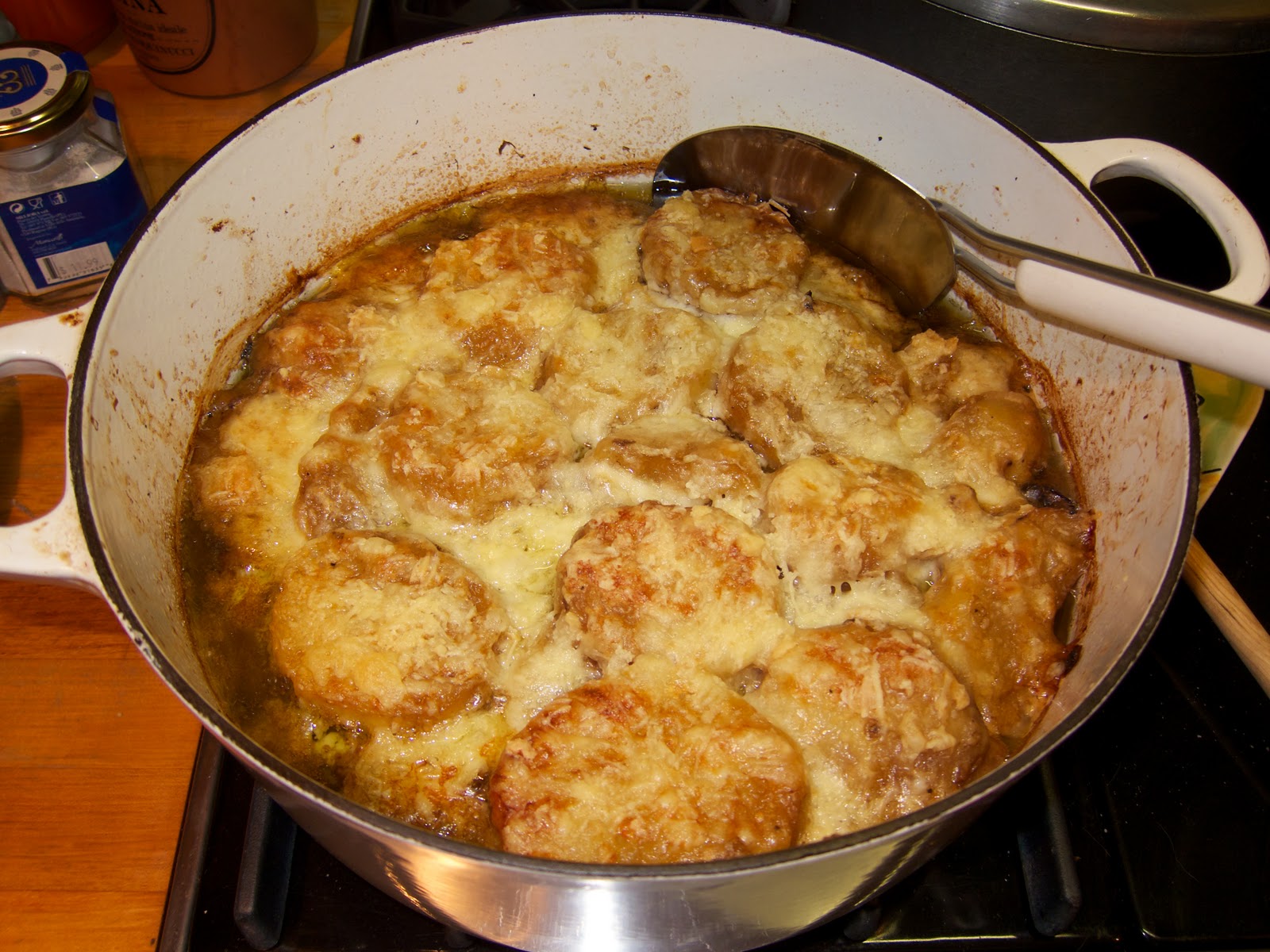
One of Barbara’s favorite restaurants in San Francisco is Tartine and we made a Panade from a recipe from Tartine. We have previously made it and knew Barbara would love it.
It is baked vegetables, bread, cheese and cream. It is very rich and good.

We started with a Mushroom Soup from the The Food of Campanile Cookbook by Mark Peel and Nancy Silverton. The soup is very rich with lots of mushrooms. We used had created a Turkey Stock from our left over Smoked Turkey and used it as a base for the soup.

We had Brownies and Chocolate Chip Cookies for dessert.

Faro and Mushroom Soup
The Food of Campanile
Mark Peel & Nancy Silverton

Serves   10 to 12

This is a wonderful, earthy soup for colder days. Also known as spelt, farro is one of the earliest domesticated strains of wheat. It tastes similar to barley, and in this soup it adds a wholesome, toothy quality. This is delicious topped with Garlic Bread Crumbs. To serve 10 to 12, the bread crumb recipe must be doubled.

If you can't find farro, pearl barley or wheat berries can be substituted, but these must be cooked at least 30 minutes longer. For a com­pletely vegetarian soup, the ham hock or bacon can be eliminated and Vegetable Stock substituted for Chicken Stock.

¾  pound fresh shiitake mushrooms
12  ounces fresh crimini mushrooms
Vegetable oil
1  medium carrot, peeled and cut into thick slices (3/4cup)
1  medium leek, trimmed, split, and cut into thick slices (1 cup)
1  medium celery stalk, peeled and cut into thick slices (1/2 cup)
5  large garlic cloves, peeled and minced (5 teaspoons)
½  cup dry sherry
1 small ham hock, or 4-ounce slab of bacon
12  cups Chicken Stock
Bouquet garni (1 sprig rosemary, 1 sprig marjoram, 2 sprigs Italian parsley, and 1 bay leaf)
¼  cup dried porcini mushrooms
Kosher salt
Freshly cracked black pepper
½  cup faro
1  bunch fresh chives

Have   ready

The Chicken Stock, warm, in a medium saucepan over low heat The Garlic Bread Crumbs (optional)

Wipe the shiitakes clean with a damp towel. Remove and reserve the stems from the shiitakes. Cut each shiitake cap into thin slices and reserve. Quickly rinse the crimini mushrooms and dry them thoroughly. Remove and reserve the stems from the crimini mushrooms. Cut each crimini cap into quarters and reserve.

In a large stockpot, over medium heat, pre­heat 2 tablespoons of vegetable oil. Sweat the mushroom stems, carrot, leek, celery, and garlic until wilted and beginning to brown, about 10 minutes. Deglaze the pan with the sherry. Add the ham hock or bacon, Chicken Stock, and bouquet garni, and bring to a simmer. Continue to simmer, skimming as necessary to remove any foam that rises to the surface, until the stock has good color and a strong mush­room flavor, about 1 hour.
While the broth is simmering, in a small mixing bowl, combine the dried porcini mush­rooms with 1/2i cup of warm water. Allow about 30 minutes for the mushrooms to reconstitute :  adequately.

In a large sauté pan, over medium-high heat, preheat 2 tablespoons of vegetable oil just to smoking. Sauté the sliced shiitake caps with­out stirring until almost charred, about 1 to 2 minutes. Continue to sauté, stirring to brown evenly, about 3 more minutes, adding a little more oil as necessary. As the shiitakes brown, season them lightly with kosher salt and black pepper. Remove the pan from the heat, remove the shiitake mushrooms, and reserve them in a small mixing bowl.

Remove the reconstituted porcini mushrooms from the soaking water, gently squeezing them to remove excess water. Reserve the soaking water. Wipe the sauté pan clean with a clean paper towel, reduce the heat to medium, and preheat 2 tablespoons vegetable oil. Sauté the I quartered crimini caps and the reconstituted porcini mushrooms until lightly browned, I about 3 to 4 minutes, seasoning with kosher salt and black pepper and adding more oil as necessary. Remove the pan from the heat, remove the crimini mushrooms, and reserve them in the small mixing bowl with the shiitakes.

After the soup has simmered for about 1 hour, using a fine-mesh, stainless-steel strainer, strain the soup, pressing the vegetables to remove as much liquid as possible. Remove and discard the vegetables. Pick out the ham hock, allow it to cool, and shred the meat, dis­carding the skin and bone. (If you're using bacon, chop it coarsely.) Return the broth and the ham or bacon to the large stockpot, and bring back to a simmer.

Add the farro to the stockpot. Add the porcini soaking water, taking care not to pour into the stockpot any of the grit from the porcinis that will have collected on the bottom of the bowl. (Dried porcini come with a fine sand that somehow goes through several layers of cheese­cloth, but it's heavy, so it stays at the bottom of the bowl if you pour carefully.) Continue to simmer, over medium heat, until the farro is tender, about 15 minutes. Add the reserved sauteed shiitake and crimini mushrooms, and continue to simmer about 15 minutes.

Mince the chives as needed for garnish.

Spoon the soup into large, warm bowls. Top with Garlic Bread Crumbs, if desired, and chopped chives. Serve immediately.

September 8, 2010
New York Times

Panade
6 tablespoons butter
2 leeks, white parts only, finely chopped (about 1½ cups)
6 cups whole milk
Salt
4-6 slices day-old country bread, each 1 inch thick
1 small butternut squash (about 1 pound), peeled, seeded and cut into ¼-inch-thick slices
1 bunch black kale or Swiss chard, center stems removed
1 head cauliflower (about 1½ pounds), trimmed and cut into ½-inch-thick slices
½ pound fontina cheese, thinly sliced
Heavy cream, optional.
1. Preheat oven to 375 degrees. Melt 2 tablespoons of the butter in a saucepan over medium heat. Add the leeks and sauté until softened, about 5 minutes. Add the milk, the remaining 4 tablespoons butter and 2 teaspoons salt. Bring to a boil and then remove from the heat.
2. Cover the bottom of a heavy, ovenproof 5-quart pot with 2 or more slices of the bread. Arrange the squash slices in an even layer on top of the bread and pour in 2 cups of the hot milk mixture. Top with 2 or 3 slices of bread and then with the kale. Arrange the cauliflower slices over the kale. Press down on the ingredients to compact them if they don’t quite fit into the pot.
3. Pour the remaining milk mixture over the top. Stop adding the milk when the level is almost to the rim. Season with salt. Cover the pot with a lid or aluminum foil. Bake for 30 minutes. Uncover and arrange the cheese over the top. Return to the oven uncovered and bake until the liquid is absorbed and reduced and the cheese has melted and browned, 30 to 40 minutes. (When the panade has cooled, it should appear dry.) Serve immediately or let cool and refrigerate for up to 3 days. To reheat, cut the panade into wedges and put on individual ovenproof plates. Pour ¼ cup cream over the top of each wedge and bake for 15 to 20 minutes in an oven preheated to 375. Serves 6. Adapted from “Tartine Bread,” by Chad Robertson.

Saturday, December 11, 2010

Travelling Mussels


Wines
Domaine Jo Pithon Anjou Chinin Blanc – Les Blanches Bergeres 2006
Domaine Ramonet Bourgogne 2007 Pinot Noir
Domaine de la Charmoise Touraine Sauvignon 2009


Robert stopped by to advise me on my Bread Baking See No Knead Bread Baking blog entry. Actually, he gave advice, I ignored it, and followed the recipe for the bread exactly as written. I do remember his valid advice and will use it for future bread baking adventures. I simply wanted to get an exact baseline for baking using the bread recipe as written. We did drink some excellent wine as the bread baked.

I then invited him to literally break bread with us to sample my first loaf. He was planning to make mussels at his house – so he went home and gathered the ingredients for his Mussels and Beans and returned with Darryl to our house to cook his mussels. He had purchased them at McCall’s Meat and Fish and they were all cleaned and de-bearded. After steaming them in wine and sherry he removed the mussels and made a stew with Italian beans. The dish was excellent, and it was great to have the fresh bread to mop up the sauce. Yum.

We re-heated the Cabbage and Rice Soup and had a small portion each – inaugurating our new soup bowls we had purchased the previous Saturday at Peter Shire's Christmas ceramics sale. The recipe can be found in our blog post of: Dec 5, 2010. Click the date to get the recipe.

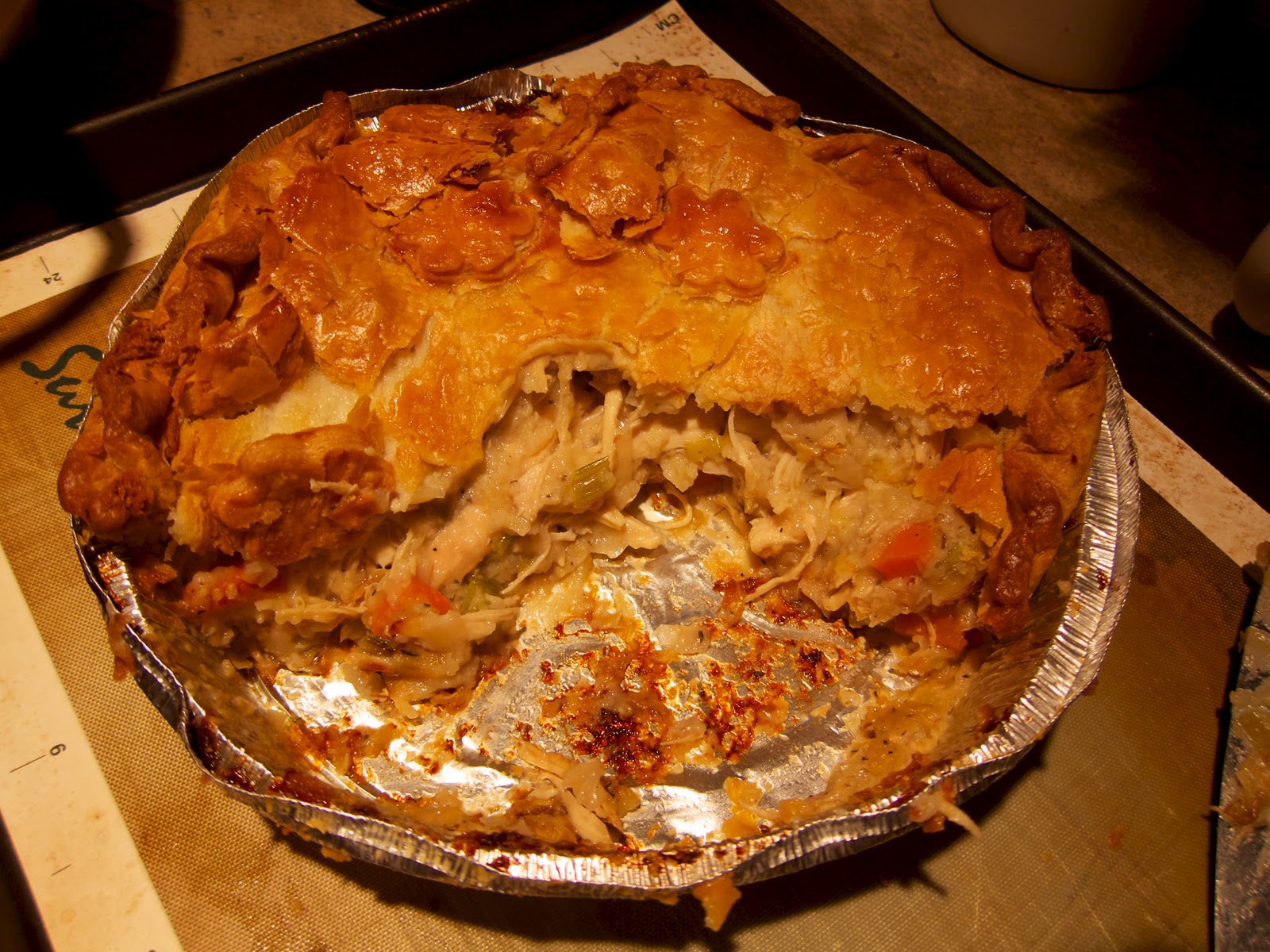
We then served a Chicken Pot Pie we had bought at Clementine. There are very few frozen foods that we like, however, Clementine is a giant exception. We always have a frozen Apple Pie, frozen Chicken Pot Pie and various frozen Soups from Clementine in our freezer. They are all excellent. To restock our freezer is one of the few reasons to drive to the West Side from our Silverlake perch.

We finished the dinner with Brownies Darryl had previously baked. We had frozen them and the defrosted perfectly. Darryl was amazed how good they were. I think he will be freezing them in the future.

No Knead Bread

The Bread mixture before it starts to rise


Turned out ready to folded twice


The Second Rising after two folds


Cooling


Pass the butter


A beautiful thing....

I had always wanted to bake bread, but know it is difficult to do it right: getting a good crunchy crust, lots of crumb and a great bread taste. The New York Times had a recipe for No Knead Bread that got rave reviews from everyone. I saved the recipe and every once in a while would think I should give it a try. But I never got around to it. We had a couple of dinners at Robert and Darryl’s where Robert made bread. I finally was inspired and I knew I could call on Robert if I had any issues. Robert joined us for the baking and gave advice as required.

I bought all of the necessary ingredients (Yeast, Bread Flour, Rye Flour, Whole Wheat Flour) and was ready to go. The more I read the recipe I realized you can modify it easily to taste (proportions of Rye, Whole Wheat, Salt). I finally decided to make the bread with only Bread Flour. The one modification I made was to increase the salt to just less than a tablespoon of salt.

There are two necessities for this recipe and a planning aspect for the baking this bread. The planning part is that it takes almost 24 house to make. You have to start it the day before you plan to eat it! The other main issue is the Le Creuset type heavy Enameled French Oven. You really need a very heavy baking vessel with close fitting top to bake the bread in. The final issue a very good pair of oven mittens. You will be removing the Le Creuset from the oven when it is 450 degrees. You don’t want to burn yourself!

Bottom line: the bread truly requires no kneading. It is delicious and the crust is fantastic! For my next bread I am going to use 16 % whole wheat flour and see what that does to the taste and texture of the bread.

No Knead Bread

Best-selling cookbook author Mark Bittman is the creator and author of the popular New York Times weekly column, "The Minimalist," and one of the country's best-known and widely admired food writers. His flagship book, How to Cook Everything, is currently in its fourteenth printing and has, in its various formats, sold over a million copies.

Mark is also a regular guest on the “Today” show and NPR's “All Things Considered” and has also appeared on countless national and local radio and television shows. He has been profiled in this country's leading newspapers, including the Boston Globe, Washington Post, and Los Angeles Times.

No Knead Bread – Original Recipe
Yield: One 1 1/2-pound loaf

Time: About 1 1/2 hours plus 14 to 20 hours’ rising

3 cups all-purpose or bread flour, more for dusting
1/4 teaspoon instant yeast
1 1/4 teaspoons salt
Cornmeal or wheat bran as needed.

In a large bowl combine flour, yeast and salt. Add 1 5/8 cups water, and stir until blended; dough will be shaggy and sticky. Cover bowl with plastic wrap. Let dough rest at least 12 hours, preferably about 18, at warm room temperature, about 70 degrees.

Dough is ready when its surface is dotted with bubbles. Lightly flour a work surface and place dough on it; sprinkle it with a little more flour and fold it over on itself once or twice. Cover loosely with plastic wrap and let rest about 15 minutes.

Using just enough flour to keep dough from sticking to work surface or to your fingers, gently and quickly shape dough into a ball. Generously coat a cotton towel (not terry cloth) with flour, wheat bran or cornmeal; put dough seam side down on towel and dust with more flour, bran or cornmeal. Cover with another cotton towel and let rise for about 2 hours. When it is ready, dough will be more than double in size and will not readily spring back when poked with a finger.

At least a half-hour before dough is ready, heat oven to 450 degrees. Put a 6- to 8-quart heavy covered pot (cast iron, enamel, Pyrex or ceramic) in oven as it heats. When dough is ready, carefully remove pot from oven. Slide your hand under towel and turn dough over into pot, seam side up; it may look like a mess, but that is O.K. Shake pan once or twice if dough is unevenly distributed; it will straighten out as it bakes. Cover with lid and bake 30 minutes, then remove lid and bake another 15 to 30 minutes, until loaf is beautifully browned. Cool on a rack.

No Knead Bread – Optional Recipes
WEIGHT VS. VOLUME - The original recipe contained volume measures, but for those who prefer to use weight, here are the measurements: 430 grams of flour, 345 grams of water, 1 gram of yeast and 8 grams of salt. With experience, many people will stop measuring altogether and add just enough water to make the dough almost too wet to handle.
SALT - Many people, me included, felt Mr. Lahey’s bread was not salty enough. Yes, you can use more salt and it won’t significantly affect the rising time. I’ve settled at just under a tablespoon.
YEAST - Instant yeast, called for in the recipe, is also called rapid-rise yeast. But you can use whatever yeast you like. Active dry yeast can be used without proofing (soaking it to make sure it’s active).
TIMING - About 18 hours is the preferred initial rising time. Some readers have cut this to as little as eight hours and reported little difference. I have not had much luck with shorter times, but I have gone nearly 24 hours without a problem. Room temperature will affect the rising time, and so will the temperature of the water you add (I start with tepid). Like many other people, I’m eager to see what effect warmer weather will have. But to those who have moved the rising dough around the room trying to find the 70-degree sweet spot: please stop. Any normal room temperature is fine. Just wait until you see bubbles and well-developed gluten — the long strands that cling to the sides of the bowl when you tilt it — before proceeding.
THE SECOND RISE - Mr. Lahey originally suggested one to two hours, but two to three is more like it, in my experience. (Ambient temperatures in the summer will probably knock this time down some.) Some readers almost entirely skipped this rise, shaping the dough after the first rise and letting it rest while the pot and oven preheat; this is worth trying, of course.
OTHER FLOURS - Up to 30 percent whole-grain flour works consistently and well, and 50 percent whole-wheat is also excellent. At least one reader used 100 percent whole-wheat and reported “great crust but somewhat inferior crumb,” which sounds promising. I’ve kept rye, which is delicious but notoriously impossible to get to rise, to about 20 percent. There is room to experiment.
FLAVORINGS -The best time to add caraway seeds, chopped olives, onions, cheese, walnuts, raisins or whatever other traditional bread flavorings you like is after you’ve mixed the dough. But it’s not the only time; you can fold in ingredients before the second rising.
OTHER SHAPES - Baguettes in fish steamers, rolls in muffin tins or classic loaves in loaf pans: if you can imagine it, and stay roughly within the pattern, it will work.
COVERING BETWEEN RISES - A Silpat mat under the dough is a clever idea (not mine). Plastic wrap can be used as a top layer in place of a second towel.
THE POT - The size matters, but not much. I have settled on a smaller pot than Mr. Lahey has, about three or four quarts. This produces a higher loaf, which many people prefer — again, me included. I’m using cast iron. Readers have reported success with just about every available material. Note that the lid handles on Le Creuset pots can only withstand temperatures up to 400 degrees. So avoid using them, or remove the handle first.
BAKING - You can increase the initial temperature to 500 degrees for more rapid browning, but be careful; I scorched a loaf containing whole-wheat flour by doing this. Yes, you can reduce the length of time the pot is covered to 20 minutes from 30, and then increase the time the loaf bakes uncovered. Most people have had a good experience baking for an additional 30 minutes once the pot is uncovered.
As these answers demonstrate, almost everything about Mr. Lahey’s bread is flexible, within limits. As we experiment, we will have failures. (Like the time I stopped adding flour because the phone rang, and didn’t realize it until 18 hours later. Even this, however, was reparable). This method is going to have people experimenting, and largely succeeding, until something better comes along. It may be quite a while.


Sunday, December 05, 2010

Pork Tiella with Wild Mushrooms and Potatoes

Pork Tiella before Baking - Potatoes scattered thru dish
Tiella after 2nd baking with Potatoes on top with Cheese


Plated Tiella


Cabbage and Rice Soup

It is wintery here in Los Angeles and Cathy found a great recipe: Pork Tiella with Wild Mushrooms and Potatoes from Mediterranean Clay Pot Cooking – Paula Wolfert. This dish is fun to make. We had purchased a beautiful fatty Pork Shoulder at McCalls Meat and Fish. After we cut up the meat, potatoes, and mushrooms we placed them in a Le Crueset pan rather than a Clay Pot Cooker (our Le Crueset is larger than our clay pots). You bake the Tiella then remove all of the potatoes from the dish and layer them on top. You then top with the grated cheese and re-bake. This creates a gratin-like dish with crunchy potatoes on top. It is very unusual and good!

Pomegranates and Persimmons are at their best right now. We have a favorite salad we make from them. We started with a favorite salad: Persimmons, Pomegranate, Arugula, Almonds, Saba, and topped with Prosciutto. We got most of the ingredients at The Cheese Store of Silverlake.

We also make Minestra di Versa e Riso (Cabbage and Rice Soup) from Cucina Rustica by Viana La Place & Evan Kleiman. It is a very easy to make soup, perfect for a cold night. If you like thick soups this is for you. Interestingly, unlike many soups it is not made from a stock – just add water!


Minestra di Versa e Riso
Cabbage    and    Rice Soup
Cucina Rustica
Viana La Place & Evan Kleiman


Serves 6 to 8

Simple, healthful ingredients that are always available create this deli­cious, savory soup.

1         head Savoy or green cabbage
¼         cup extra-virgin olive oil
6          ounces prosciutto, roughly chopped
2         quarts water
Salt and freshly ground black pepper to taste
½         cup long-grain rice
Grated Parmesan cheese for table use

Core the cabbage and shred as for cole slaw. Heat the oil in a soup pot with a heavy bottom. Add the prosciutto and saute over low heat until it renders its fat. Add the shredded cabbage and stir until it is well coated with oil. Add the water to cover the cabbage. Bring to a boil, then turn down the heat and simmer the soup gently. If you wish, place the cover slightly askew on the soup pot. Cook until cabbage is very tender, approximately 1 1/2 hours. Add salt and pepper to taste. About 1/2 hour before serving, remove the cover, bring the soup to a lively boil, and add the rice. Cook over high heat until the rice is tender, about 15 minutes. Serve immediately, passing grated Parmesan cheese to sprinkle on the soup.


Pork Tiella with Wild Mushrooms and Potatoes
Mediterranean Clay Pot Cooking
Paula Wolfert
SERVES 4
This recipe is from the Silana Mountains area of Calabria, Italy, where the wonderful cow's milk cheese called caciocavallo is made. You may have seen pairs of the pear-shaped cheese connected by a rope hanging over a beam in Italian groceries, a shape resembling the legs of an equestrian, which explains its name {cavallo means "horseman" in Italian).

A tiella is a wide, medium-high glazed earthenware cooking vessel popular in Calabria and Puglia; the word also refers to the dish cooked in the pot. Success depends on proper evaporation of
moisture, the quality of the mushrooms, the meat, and the potatoes, as well as on the cooking time, which must be calculated perfectly so that everything becomes meltingly tender at the same moment. Happily, a Spanish cazuela will work perfidy wellin this savory recipe.

Preferred Clay Pot:
A 12-inch Spanish cazuela or a tiella from southern Italy. If using an electric or ceramic stovetop, be sure to use a heat diffuser with the clay pot.

¾         cup dried porcini or cepes mushrooms 3/4 ounce)
3         tablespoons extra virgin olive oil
3         garlic cloves, crushed
3         ounces thinly sliced pancetta, shredded
1         pound boneless pork shoulder, cut into l'^-inch chunks
1         pound red potatoes, peeled and thickly sliced
1         pound Italian brown mushrooms, quartered
1         long fresh rosemary sprig
A teaspoon crushed hot red pepper
Salt and freshly ground black pepper
4         ounces caciocavallo or aged provolone cheese,shredded
1         tablespoon chopped fresh flat-leaf parsley

1.   Soak the porcini in 1 cup hot water for 20 to 30 minutes. Rub the mushrooms together to loosen any dirt and grit; then remove them from the water and coarsely chop. Strain the soaking liquid through a coffee filter or double layer of cheesecloth and set aside.

2.   Heat 2 tablespoons of the olive oil in the cazuela. Add the garlic and pancetta and cook over medium-low heat, stirring, until golden, about 5 minutes. When the cazuela is warm, raise the heat to medium, add the pork, and cook, stirring, until lightly browned, about 10 minutes. Add the potatoes, chopped porcini, quartered fresh mushrooms, rosemary, hot red pepper, 1 teaspoon salt, 1/2 teaspoon pepper, and the reserved mushroom-soaking liquid. Cover and simmer over low heat for 45 minutes. (The recipe can be prepared to this point up to 1 day in advance. Bring back to room temperature before continuing.)

3.   About 1 1/2 hours before serving, scrape any surface fat from the pork dish. Carefully pick out as many potatoes as possible and set aside. Arrange the meat and mushrooms in one layer and top with a layer of the potatoes. Gently press down to make the dish compact. Scatter the remaining tablespoon olive oil and the cheese on top and set in a cold oven. Set the temperature at 400°F and bake for 30 minutes. Turn off the heat, and let the dish continue to cook in the receding heat for 45 minutes. Serve hot or warm, with the chopped parsley sprinkled on top.