I love this recipe for Sausage and Polenta. We make it several times per year. You can find the recipe on our blog of: October 6, 2015. Click the date to get the recipe.We started with a Pea Puree. The recipe for the Pea Puree can be found on our blog of: March 25, 2013. For desert we finally unwrapped our Mary's Holiday Cake - we make it every year. It is a great cake. You can find the recipe on our blog of January 1, 2011. Click the date to get the recipe. It was quite a dinner.
Thursday, January 09, 2020
Sausage and Polenta with Pea Puree
I love this recipe for Sausage and Polenta. We make it several times per year. You can find the recipe on our blog of: October 6, 2015. Click the date to get the recipe.We started with a Pea Puree. The recipe for the Pea Puree can be found on our blog of: March 25, 2013. For desert we finally unwrapped our Mary's Holiday Cake - we make it every year. It is a great cake. You can find the recipe on our blog of January 1, 2011. Click the date to get the recipe. It was quite a dinner.
Wednesday, January 08, 2020
Swordfish and Rustic Spinach and Cornmeal Soup
I like Swordfish and we made a recipe that we have made before: Swordfish with Crushed Olives and Oregano. This is an excellent Swordfish recipe. You can find the recipe on our blog of: October 26, 2019. Click the date to get the recipe. With the Swordfish we made a new soup for us: Rustic Spinach and Cornmeal Soup. It was good however I thought it was unusual given the grittiness of the Cornmeal. We served it with Freekeh.
Rustic Spinach and Cornmeal Soup
Bon Appétit
Ingredients
6 cups (or more) low-salt chicken broth or vegetable broth
¾ cup polenta (coarse cornmeal)
3 tablespoons all purpose flour
3 tablespoons butter
2 garlic cloves, peeled, crushed
Coarse kosher salt
8 ounces baby spinach leaves
Recipe Preparation
Bring 6 cups broth to simmer in large saucepan; cover to keep warm. Whisk polenta and flour in heavy large pot. Add 1 cup hot broth; whisk over medium-high heat until smooth. Stir in butter and garlic; sprinkle lightly with coarse salt. Gradually add 5 cups hot broth by cupfuls. Boil gently over medium heat until polenta is tender and soup is creamy and thickened, whisking frequently and adding more broth to thin, if desired, about 25 minutes. Stir in spinach by handfuls; simmer until wilted, stirring often, 5 to 7 minutes longer. Season with more coarse salt and black pepper.
Ladle soup into 6 bowls and serve.
Basic Cooking Instructions for Cracked Freekeh
Bob’s Red Mill
Ingredients
2-½ cups Water
½ tsp Salt
1 cup Organic Cracked Freekeh
Instructions
Bring water and salt to a boil. Add freekeh, cover and reduce heat to medium-low. Simmer until liquid is absorbed, about 20 minutes. Remove from heat and let stand, covered, for 5 minutes.
Tuesday, January 07, 2020
Pea Puree
![]() |
| Isn't this a great picture! |
Indian Butter Chickpeas
Indian Butter Chickpeas, a vegetarian dish was a total surprise to me. I did not expect to like it, but I really did. We will make it again. I recommend it very much.
Indian Butter Chickpeas
New York Times
YIELD4 to 6 servings
TIME1 hour 10 minutes
A vegetarian riff on Indian butter chicken, this fragrant stew is spiced with cinnamon, garam masala and fresh ginger, and is rich and creamy from the coconut milk. You could add cubed tofu here for a soft textural contrast, or cubed seitan for a chewy one. Or serve it as it is, over rice to catch every last drop of the glorious sauce. You won’t want to leave any behind.
Ingredients
4 tablespoons unsalted butter
1 large onion, minced
1-½ teaspoons kosher salt, plus more to taste
4 garlic cloves, finely grated or minced
1 tablespoon grated fresh ginger
2 teaspoons ground cumin
2 teaspoons sweet paprika
2 teaspoons garam masala
1 small cinnamon stick
1 (28-ounce) can whole peeled plum tomatoes
1 (15-ounce) can coconut milk
2 (15-ounce) cans chickpeas, drained
Ground cayenne (optional)
Cooked white rice, for serving
½ cup cilantro leaves and tender stems, for serving
Preparation
1. Melt butter in a large heavy-bottomed pot or Dutch oven over medium heat. Stir in onion and 1/2 teaspoon salt; cook until golden and browned around the edges, stirring occasionally, about 20 minutes. (Don’t be tempted to turn the heat up to medium-high; keeping the heat on medium ensures even browning without burning the butter.)
2. Stir in garlic and ginger, and cook another 1 minute. Stir in cumin, paprika, garam masala and cinnamon stick, and cook another 30 seconds.
3. Add tomatoes with their juices. Using a large spoon or flat spatula, break up and smash the tomatoes in the pot (or you can use a pair of kitchen shears to cut the tomatoes while they are still in the can). Stir in coconut milk and the remaining 1 teaspoon salt. Bring to a simmer, and continue to cook for 10 minutes, stirring occasionally, and continuing to mash up the tomatoes if necessary to help them break down.
4. Stir in chickpeas and a pinch of cayenne if you like. Bring the pot back up to a simmer and cook, stirring occasionally, for another 10 minutes. Taste and add more salt if necessary.
5. Serve spooned over white rice, and topped with cilantro.
Friday, January 03, 2020
Spicy Caramelized Squash with Lemon and Hazelnuts
Spicy Caramelized Squash with Lemon and Hazelnuts made for a great vegetable side. The recipe makes a lot of food, so I would consider cutting it in half when we made it again.
Spicy Caramelized Squash with Lemon and Hazelnuts
New York Times
YIELD 8 to 10 servings
TIME 50 minutes
This ultimate sweet-and-salty squash recipe can be done with most hearty orange vegetables, like sweet potatoes or even carrots (no need to peel any of these). The vegetables are tossed simply with olive oil and something sticky, like maple syrup or honey, and roasted until tender and caramelized. To add some texture back into the mix, the vegetables are finished with toasted nuts and plenty of fresh lemon zest for some perkiness.
Ingredients
1 (3- to 4-pound) winter squash, such as kabocha, red kuri or butternut
⅓ cup olive oil, plus more for drizzling
¼ cup maple syrup, plus more for drizzling
1 tablespoon hot smoked paprika
2 teaspoons red-pepper flakes
Kosher salt and freshly ground black pepper
¾ cup hazelnuts, coarsely chopped (no need to remove the skins)
Flaky sea salt
1 lemon
Preparation
1. Heat oven to 425 degrees. Cut the squash in half lengthwise. Remove pulp and seeds, if you like. Continue to cut squash into 1 1/2-inch wedges.
2. Toss squash on a rimmed baking sheet with olive oil, maple syrup, paprika and red-pepper flakes. Season with kosher salt and pepper, and roast, turning each piece once, until both sides are evenly browned and squash is completely tender, 40 to 45 minutes.
3. Meanwhile, toast hazelnuts in a small skillet over medium heat, tossing frequently until they’re evenly browned, about the color of a good piece of toast, and smell almost like popcorn, 4 to 6 minutes.
4. Remove from oven and transfer squash to a large serving platter. Drizzle with olive oil and a bit more maple syrup. Sprinkle with hazelnuts, flaky salt and more black pepper. Zest lemon over everything and halve lemon to squeeze over before serving.
Wednesday, January 01, 2020
A Perfect New Year's Day Dinner
After an excellent New Years Eve dinner at Tsubaki, we decided to eat at home on New Years Day. We heated up Potato Pancakes and topped them with Smoked Salmon and Caviar. Now there is a perfect dinner when served with Champagne!
Monday, December 30, 2019
Pork Braised in Milk
Pork Braised in Milk is an all time favorite! You can get the recipe for the Pork on our blog of: October 17, 2011. Click the date to get the recipe. For Chanukah rather than make Latkes we bought the Potato Pancakes from Wexler'sDeli. They delivered them, it was perfect. Not exactly Kosher but what a great meal!
Saturday, December 28, 2019
Crab Macaroni Gratin
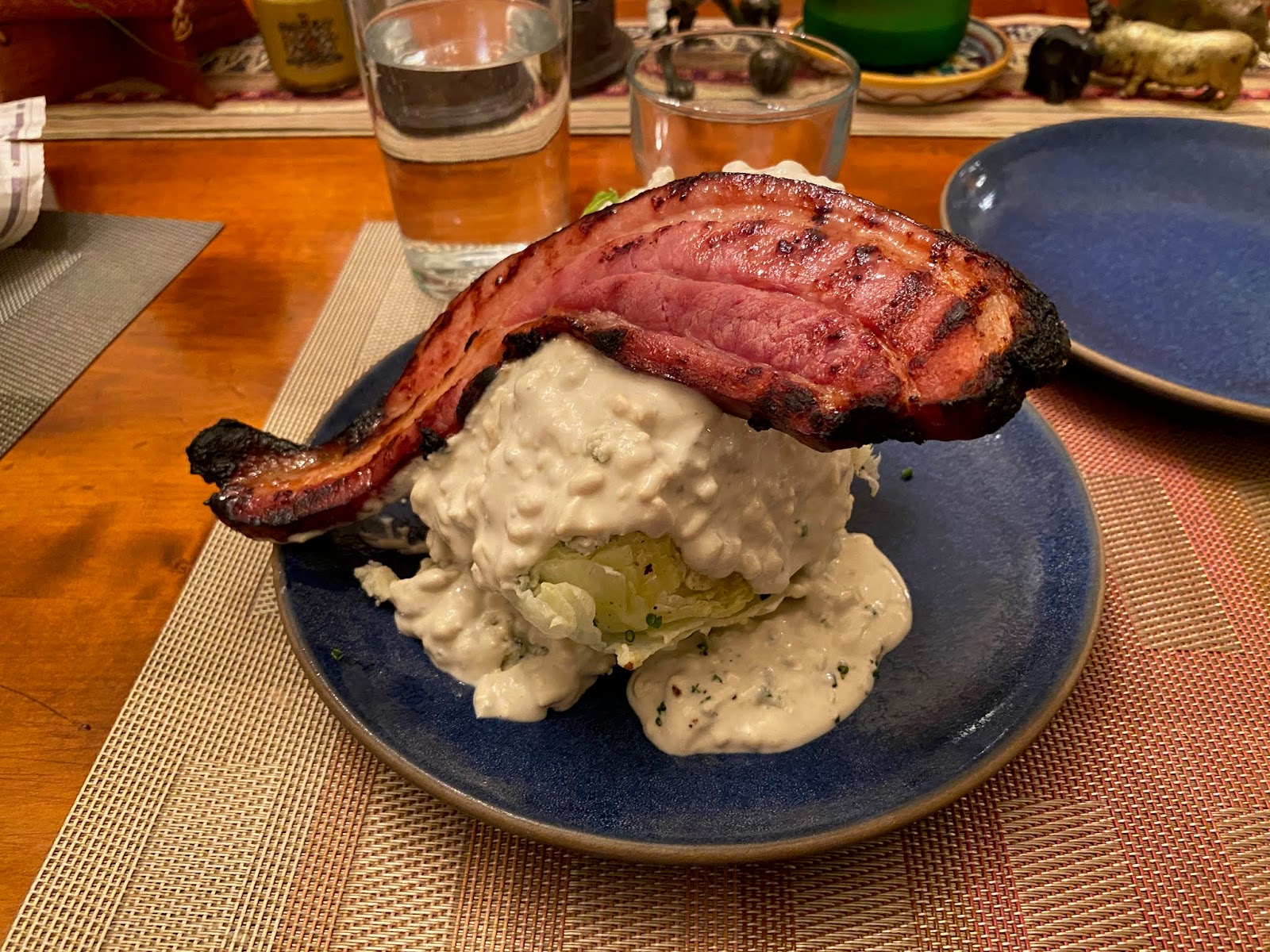
Good news, bad news. Bad news: we didn't like Crab Macaroni Gratin. To our taste it was tasteless and a waste of good Crab. We won't make this recipe again. The good news, I love the APL Wedge Salad (especially the Bacon and Blue Cheese dressing), Caviar delivers it from APL Restaurant to our door. My kind of takeout!
Crab Macaroni Gratin
Food and Wine
Andrea Slonecker
My mid-December birthday marks the start of Dungeness crab season in the Pacific Northwest. Perhaps I’m biased, but in my opinion, Dungeness is the tastiest crab there is, and worth celebrating in and of itself. Several years ago, I started inviting friends over under the guise of a birthday party, but really, it’s a celebration of the season, the past year, and, yes, the fresh catch of the best crab on the planet.
My guest list includes too many friends to fit around my dining table, so we’re packed like sardines, snug in the candlelit room with magnums of Champagne and piles of steaming whole crabs to be cracked and dipped in melted butter. It’s messy and a bit chaotic, but fancy at the same time. I’d have it no other way.
I like to choose a theme for the annual menu, usually inspired by a travel experience I had that year. Last year I visited one of my favorite cities, New Orleans, not once but twice, so it seemed fitting to laissez les bons temps rouler come December. The crab was cooked with Creole seasonings in the boil, classic and delicious, but the surprise hit was this macaroni au gratin served with it.
To make it, I channeled iconic restaurants like Galatoire’s, Clancy’s, and Brigtsen’s—some of my favorites to visit when I’m in the Big Easy. A glorious amount of crabmeat baked with shell-shaped pasta in a three-cheese cream sauce —tangy white Cheddar, nutty Gruyère, and sharp Parmigiano-Reggiano—is no-joke delicious, and trés riche. That’s where the Champagne comes in. The tingly bubbles give your palate an ultrasonic scrub between each creamy, cheesy, blissful bite. Blanc de blancs, or Chardonnay-based Champagnes, are particularly good here. They can be saline like shellfish, complex like great cheeses, and bring enough acidity to play counterpoint to both.
This recipe is not cheap, but it is easy. Once you shred the cheese, the rest is simple assembly. I buy the crabmeat picked, because, as I’m told by my fishmonger, it averages out to be about the same price as cooking whole crabs and picking the meat yourself, and it saves precious time. If you don’t have access to Dungeness, try this with your local variety, or whatever type of crab you can get your hands on.
My guest list includes too many friends to fit around my dining table, so we’re packed like sardines, snug in the candlelit room with magnums of Champagne and piles of steaming whole crabs to be cracked and dipped in melted butter. It’s messy and a bit chaotic, but fancy at the same time. I’d have it no other way.
I like to choose a theme for the annual menu, usually inspired by a travel experience I had that year. Last year I visited one of my favorite cities, New Orleans, not once but twice, so it seemed fitting to laissez les bons temps rouler come December. The crab was cooked with Creole seasonings in the boil, classic and delicious, but the surprise hit was this macaroni au gratin served with it.
To make it, I channeled iconic restaurants like Galatoire’s, Clancy’s, and Brigtsen’s—some of my favorites to visit when I’m in the Big Easy. A glorious amount of crabmeat baked with shell-shaped pasta in a three-cheese cream sauce —tangy white Cheddar, nutty Gruyère, and sharp Parmigiano-Reggiano—is no-joke delicious, and trés riche. That’s where the Champagne comes in. The tingly bubbles give your palate an ultrasonic scrub between each creamy, cheesy, blissful bite. Blanc de blancs, or Chardonnay-based Champagnes, are particularly good here. They can be saline like shellfish, complex like great cheeses, and bring enough acidity to play counterpoint to both.
This recipe is not cheap, but it is easy. Once you shred the cheese, the rest is simple assembly. I buy the crabmeat picked, because, as I’m told by my fishmonger, it averages out to be about the same price as cooking whole crabs and picking the meat yourself, and it saves precious time. If you don’t have access to Dungeness, try this with your local variety, or whatever type of crab you can get your hands on.
Ingredients
8 ounces uncooked medium pasta shells (about 3 cups)
4 ounces white cheddar cheese, finely shredded (about 1 cup)
3 ounces Gruyère cheese, finely shredded (about 3/4 cup)
3 ounces Parmigiano-Reggiano cheese, grated (about 3/4 cup)
2-1/2 cups heavy cream
1 medium garlic glove, finely chopped
12 ounces fresh Dungeness crabmeat (about 2 cups), picked over
5 tablespoons thinly sliced fresh chives, divided
Fine sea salt, to taste
How To Make It
1. Cook pasta in boiling salted water according to package directions for al dente. Drain.
2. Meanwhile, toss together cheddar, Gruyère, and Parmigiano-Reggiano until well combined; set aside 1 cup cheese mixture. Preheat broiler to low with oven rack in top third of oven.
3. Bring cream just to a boil in a large saucepan over medium-high. Reduce heat to low; add garlic, and gently simmer, stirring often, 2 minutes. Stir in cooked pasta, and return to a gentle simmer over medium. Cook, stirring often, 1 minute. Reduce heat to medium-low. Stir in cheese mixture in three additions (about 1 1/2 cups at a time), until cheese is melted after each addition. Gently stir in crab and 1/4 cup chives. Season to taste with salt.
4. Spoon pasta mixture into an 8- x 6- x 2-inch broiler-proof baking dish set on a rimmed baking sheet. Top with reserved 1 cup cheese mixture in an even layer.
5. Broil in preheated oven until cheese is golden brown and crusty, 5 to 7 minutes, rotating as needed for even browning. Let stand 5 to 10 minutes, and sprinkle with remaining 1 tablespoon chives.
Sunday, December 22, 2019
Japanese Chicken Curry with Relish of the Seven Lucky Gods
We ate at a special dinner at Tsubaki, a favorite local Japanese Restaurant. There was a book signing for the Cookbook: Japanese Home Cooking by Sonoko Sakai and we all got a Japanese Cookbook. This recipe for Japanese Chicken Curry with Relish of the Seven Lucky Gods was from the book, but unfortunately we either didn't follow the recipe correctly or the recipe just isn't excellent. No matter, we didn't like it. But that doesn't mean you can't try it for your self!
Japanese Home Cooking
Sonoko Sakai
My mother always made curry with S&B or House foods curry bricks, just as convenient as bouillon cubes. I like the convenient part, but I don’t care for all the additives that go into most of these store-bought brands. So I started making my own by blending a variety of spices including turmeric, which gives my curry a bright mustardy yellow color and pungent flavor. First you will need to make your own Japanese Curry Brick which you can keep in the fridge for 1 week or in the freezer for 3 months. The base stock is a cold-brew kombu and shiitake mushroom dashi, which can, like the curry brick, be made ahead of time. The curry is traditionally served with rice or noodles and fukujinzuke, a classic pickle made with seven vegetables, a perfect crunchy counterpart to the soft, mild curry.
Makes 4 servings
2 tablespoons vegetable oil
1-1/2 pounds boneless chicken thighs, cut into 1-inch chunks
2 onions, halved and thinly sliced
2 cloves garlic, minced
2 tablespoons minced ginger
2 carrots, cut into bite-size pieces
1 celery stalk, cut into bite-size pieces
1 pound Yukon Gold, russet, or other potatoes, peeled and cut into bite-size piece
8 cups Bonito and Kombu Dashi or chicken stock
1 tablespoon honey
2 tablespoons soy sauce, or to taste
2 tablespoons sake
½ recipe Japanese Curry Brick (recipe follows)
Salt and freshly ground black pepper
1 recipe Fukujinzuke
Heat the oil in a large saucepan over medium heat Add the chicken and cook until lightly browned, 6 to 8 minutes.
Reduce the heat to low and add the onions, garlic, and ginger. Cook until softened, about 5 minutes. Add the carrots, celery, potatoes, dashi, honey, soy sauce, and sake, increase the heat to medium-high, and bring to a boil. Lower the heat and simmer for 20 minutes, or until the liquid is reduced by a third. Add the curry brick, stir to break it down, and continue simmering until the sauce is thickened but still pourable and reduced by about two-thirds, about 30 minutes. Season with salt and pepper as needed. Remove from heat and serve with rice and fukujinzuke.
japanese curry brick
Most Japanese cooks rely on prepared curry bricks to make curry. These are basically blocks of seasoned roux—the shape of a chocolate bar- made of spices (including turmeric, coriander, cumin, and fennel), salt, flour, and butter that can be dissolved in water to make an instant curry sauce. My brick is on the mild side, so if you like it spicier, add the cayenne pepper. To make your' curry block gluten-free, chickpea flour is a good alternative that is used in Indian curries. If using chickpea flour, it will be soupy in consistency. You can add a tablespoon of mochiko (glutinous rice flour) diluted with equal amounts of water to thicken the curry.
One curry brick in this recipe makes about three of Japanese-style curry. You can break up the brick into three pieces and store it in the refrigerator. This recipe makes more curry powder than you will need for the brick. You can use the remaining powder to sprinkle on vegetables and salads or save it for the next batch of brick.
FOR THE CURRY POWDER
1 tablespoon brown or black mustard seeds
1 2-inch (piece of cinnamon stick, broken into small pieces
1 bay leaf
2 to 3 cardamom pods
1 tablespoon coriander seeds
1 tablespoon fennel seeds
1 tablespoon cumin seeds
1 teaspoon fenugreek seeds
½ teaspoon whole cloves
1-1/2 teaspoons black peppercorns
1 teaspoon sweet paprika
1 tablespoon ground ginger
1 tablespoon ground turmeric
1 tablespoon sea salt
1 teaspoon cayenne pepper (or more to taste)
FOR THE ROUX
½ cup (1 stick) unsalted butter
2/3 cup all-purpose flour or chickpea flour
In a medium skillet, toast mustard seeds, cinnamon, bay leaf, cardamom pods, coriander seeds, fennel seeds, cumin seeds, fenugreek seeds, and cloves over medium heat, stirring until fragrant, about 2 minutes. Remove from heat.
Transfer the toasted spices to a spice grinder, add the peppercorns, and grind at the highest speed for 30 seconds. Shake the grinder a couple of times to make sure the cinnamon stick is pulverized. Sift the ground spices through a fine-mesh strainer set over a bowl. Add the paprika, ginger, turmeric, salt, and cayenne, if using. You will have 2/3 cup of the ground spice mix.
To make the curry brick, put the butter in a medium nonstick skillet and pi ace over medium-high heat. When the butter is nearly melted, turn the heat to low. Add the flour and cook, stirring constantly, until the roux turns light brown, 15 to 20 minutes, being careful not to let it bum. Add 1//3 cup of the curry powder and mix well. Transfer the seasoned roux to a small container or mini aluminum loaf pan measuring 5-1/4 x 3-1/2 x 2 inches. Let stand at room temperature until the roux is set about 3 hours, but you can start using the curry brick in liquid form if you wish to make curry right away.
To store, take the curry brick out of the container and wrap in parchment paper or plastic wrap and store in the refrigerator for up to 1 month or in the. freezer for up to 3 months.
Subscribe to:
Posts (Atom)