Friday, April 12, 2019

Chinese Food with Excellent Dessert!


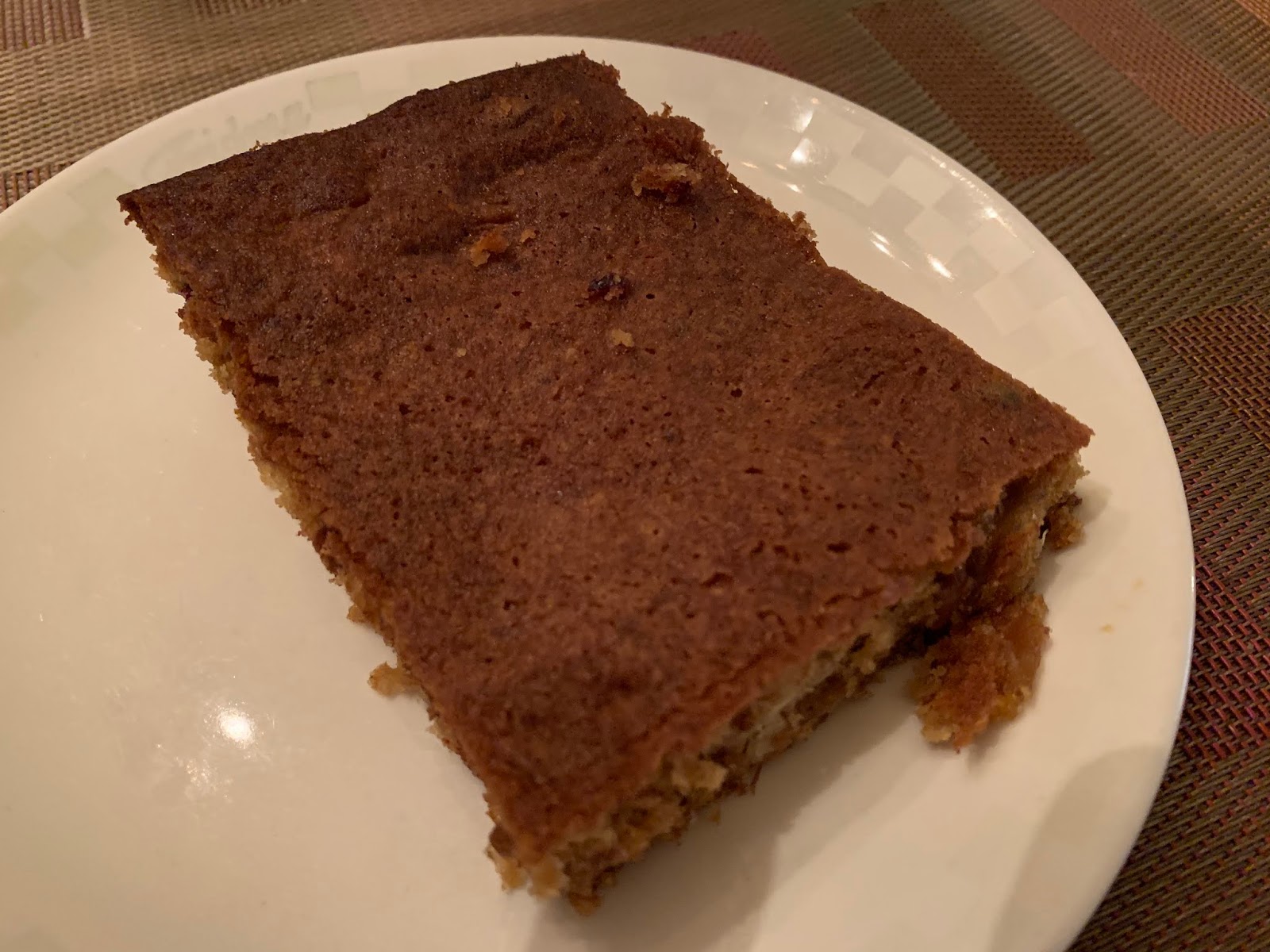
We made these two dishes. One Chinese: Ginger-Scallion Chicken, one old school: Date and Walnut Bars. Both were excellent. When we eat out a Chinese Restaurants we always skip dessert (can't stand the bean curd). We augmented the recipe by adding some Cashews. A little crunch in the food always helps! Here we got the best of both worlds: Home made Chinese and an excellent dessert!

Ginger-Scallion Chicken
New York Times

In this easy chicken stir-fry, adapted from Lan Hing Riggin, a home cook from Virginia who grew up cooking with her family in Hong Kong, slivers of ginger and scallions turn golden, adding their sweetness and pungency to the oil. A dash of soy sauce provides saltiness and depth, while a full cup of cilantro leaves, used as garnish, makes the dish a bit lighter and fresher. Fire seekers can add a sliced chile or two along with the ginger.

Ingredients

2        large scallions, trimmed
¼       cup peanut oil, or neutral oil such as grapeseed or sunflower, more as necessary
1-¾   pounds boneless skinless chicken thighs or breasts, cut into 1-inch chunks
½       teaspoon kosher salt, as needed
1        cup roughly chopped cilantro leaves and tender stems
1        (2 1/2-inch) piece ginger, cut into thin matchsticks (about 3 tablespoons)
3        tablespoons soy sauce

Preparation

1.  Cut the scallions in quarters lengthwise, then cut crosswise into 1 1/2-inch-long pieces. You should end up with thin blades of scallions. Separate out the dark green tops from the pale green and white parts. (You don’t have to be very thorough; some mixing of colors is fine.)
2.  Heat oil in a wok or 12-inch skillet over very high heat. When it’s shimmering but not smoking, stir in chicken and salt. Cook, stirring almost constantly, until chicken is barely cooked and no longer pink, 3 to 5 minutes. Use a slotted spoon to transfer chicken onto a serving plate, leaving the oil in the pan. Immediately scatter cilantro and scallion greens (not whites) over hot chicken.
3.  Return wok to medium-high heat. Make sure there are at least 2 tablespoons oil in the wok. If not, add more oil. Stir in ginger and cook until lightly browned, about 1 minute. Stir in scallion whites, soy sauce and sugar, and cook for another 30 seconds (if using a skillet, remove from heat). Immediately spoon the contents of the pan evenly over chicken and herbs. Serve right away.

-->
These Date-and-Walnut Bars Are Food for the Gods
New York Times

At the end of each school year, Margarita Manzke and her seven siblings piled into the family car in Manila, where her father ran a fish-sauce factory, to drive to her mother’s resort in Subic Bay, on the west coast of Luzon, about two hours away. They spent summers there, not swimming and sunbathing like other families on vacation from the city. Not bobbing down the waves on boogie boards, or falling asleep under umbrellas with books in one hand and drinks in the other. Even as a teenager, Manzke was an entrepreneur. And summertime, free from the structure of daily classes and homework, was for one thing, and one thing only: engaging in the sport of friendly competition with her brothers and sisters.
One summer, Manzke and her siblings learned to burn sugar to make the dark, sweet base for homemade sago at gulaman, the drink full of tapioca pearls and jellies. One of her brothers sold these chilled, at a prized location, to the sweaty, thirsty tourists that packed the beach. Big deal! Manzke paid a local butcher to slaughter three whole pigs and roast the meat so she could sell plates of crisp-skinned lechon to the same hungry beachgoers. When one of her sisters turned an empty cottage on the resort property into a makeshift bakery — a cache of sweets and layered cakes — Manzke leveled up, learning to make chocolate cakes filled with a soft custardy center and draw her own regular customers. Their father encouraged the children to be creative with their businesses to earn money for the school year, but they didn’t require much encouragement. “It was so fun,” Manzke said. “I look back and laugh, because I was really kind of insane.”
By the time Manzke was in high school, she’d turned her attention to a book of Filipino desserts and sweets — a thin pamphlet, less than 50 pages long, that she found in the kitchen. It didn’t look like much, but in it, she found a recipe for the golden-colored date-and-walnut bars known in the Philippines as food for the gods. The sweet is especially popular around Christmas, when it’s sold in individually wrapped squares, like tiny fruitcakes. All December, at home in Manila, Manzke made batches of the bars after school, then woke up at 4 a.m. to pack them in the cute boxes she built out of pieces of corrugated cardboard, glue and dark green paint.
Some batches softer. Manzke liked the bars especially tender and chewy, packed with fruit and nuts. And as she refined the technique, based on the basic recipe in the pamphlet, more and more orders came in from her friends, and her friends’ parents, and her parents’ friends. She baked every day to keep up. “It was a lot of trial and error,” said Manzke, who noticed that creaming the butter too much, or using a light hand with the dates, would push the bars toward a more caky texture. Like any pastry chef in the making, she was now in a sweet, ongoing competition with herself, comparing each batch with the previous ones, and slowly moving toward an ideal.
Manzke went on to culinary school, then moved to Los Angeles to work in restaurant kitchens. She sells her perfected date-and-walnut bars at République, the Los Angeles restaurant and bakery she runs with her husband, Walter, where the pastry case is packed each morning with strawberry-pistachio tarts, banana-Nutella crostatas and big chocolate-chip cookies. If you can’t get there, you can make them at home: Cut the dates nice and big. Keep an eye on the butter and sugar, so the mixture doesn’t get overly pale and airy. And don’t skimp on the fruit and nuts. If you follow Manzke’s simple techniques, you’ll get the chewiness that makes the bars so special on your very first try.
Date-and-Walnut Bars
YIELD About 24 bars
TIME1 hour
This recipe for golden, chewy, date-and-walnut-packed bars comes from the Los Angeles pastry chef Margarita Manzke, who grew up in the Philippines and now runs the sweet side of the kitchen at République. When she was in high school, Manzke came across the classic recipe for “food for the gods” in a thin pamphlet of Filipino desserts, and she made the bars again and again, learning how to produce a consistently tender, chewy batch: Don’t overcream the butter, and don’t use a light hand with the dates. Manzke sells fresh bars at République, but know that at home the cooled, cut bars store well in the freezer, ready to pop out and defrost at a moment's notice.

Ingredients

2-⅔  cups all-purpose flour
1       teaspoon baking powder
1       teaspoon baking soda
½      teaspoon kosher salt
4       cups large Medjool dates, pitted and roughly chopped into 1/2-inch pieces
1       pound unsalted butter (4 sticks), at room temperature
2-⅓  packed cups dark brown sugar
¼      cup granulated sugar
6       eggs
2-⅓  cups walnuts, roughly chopped

Preparation

Heat the oven to 325, and line a 13-by-18-inch sheet pan with parchment paper. Whisk together the flour, baking powder, baking soda and salt in a large bowl until well mixed and no lumps remain. Tip about 1/2 cup of the flour mixture into a medium bowl; add the dates, and toss well to coat, breaking up the dates as you go. Set aside.
In a stand mixer fitted with the paddle attachment, cream the butter with both sugars just until smoothly incorporated, about 2 minutes on medium speed. Add the eggs in 3 batches, mixing well each time and scraping down the sides of the bowl and the paddle between additions.
Add the flour mixture and date mixture, and mix gently on low just until incorporated. Remove the bowl from the mixer, and use a spatula to fold in the walnuts. Transfer the mixture to the parchment-lined sheet pan, and use an offset spatula to spread it in an even layer, pushing it into the edges and corners and smoothing the surface. Bake until brown and set, about 45 minutes.
Cool completely in the pan, then remove and cut into squares. Serve right away, or store in an airtight container for up to 5 days.

Thursday, April 11, 2019

Asparagus and Salmon Pasta


We had purchased Smoked Salmon at Cookbook in Echo Park. We saw this recipe for Salmon and Asparagus Pasta. I liked it! Would definitely make again.


Fettuccine with Asparagus and Smoked Salmon
The New York Times

Fresh pasta, asparagus and smoked salmon are tossed with shallot cream sauce in this elegant weeknight dinner that can be prepared in well under an hour.

Ingredients

½            pound fresh asparagus, medium thickness
Salt
1             tablespoon butter
½            tablespoon minced shallots
1             cup heavy cream
4             ounces smoked salmon sliced 1/4-inch thick
Freshly ground black pepper
1             teaspoon fresh lemon juice
9 to 10   ounces fresh green fettuccine noodles
2             tablespoons minced fresh dill

Preparation

1. Snap off the ends of the asparagus where they break naturally and peel the stalks. Cut the asparagus on a slant to pieces about an inch long.
2. Steam the asparagus until they are just barely tender and still bright green, about three minutes. Rinse under cold water, drain well on paper towels and set aside.
3. Bring a large pot of salted water to a boil for the pasta.
4. While the water is coming to a boil, melt the butter in a large heavy skillet. Add the shallots and saute until soft but not brown. Stir in the cream and simmer about five minutes, until the cream has thickened somewhat.
5. Cut the salmon into slivers, add it to the cream and remove the skillet from the heat. Season with pepper and lemon juice. Add the asparagus.
6. When the pot of water is boiling, add the fettuccine, stir it once or twice, then cook two to three minutes after the water has returned to a boil. Drain well.
7. Briefly reheat the sauce. Transfer the fettuccine to a warm serving bowl, pour the sauce over it and toss. Sprinkle with dill and serve.
-->

Wednesday, April 10, 2019

Tom's Cauliflower


Our neighbor Tom loves to garden. He brought over a Cauliflower he had grown. We then made our new favorite presentation: Cauliflower Gratin with Leeks and White Cheddar. This is a great recipe. You should try it. The recipe can be found on our blog of: January 26, 2019. If you haven't made this yet, you should!

Tuesday, April 09, 2019

Asparagus Pasta


Spring is Asparagus season. This perennial favorite of Asparagus Pasta is a dinner I always look forward to. It is easy to make and delicious. It also proves my father wrong. Pasta Sauce does not need Tomatoes! You can find the recipe for this perfect spring Pasta on our blog of: April 17, 2007. Make this if you haven't.

Thursday, April 04, 2019

Fettuccine with Asparagus and Smoked Salmon


Fettuccine with Asparagus and Smoked Salmon is a new Spring favorite of mine. I LOVE this recipe.

Fettuccine with Asparagus and Smoked Salmon
The New York Times

Fresh pasta, asparagus and smoked salmon are tossed with shallot cream sauce in this elegant weeknight dinner that can be prepared in well under an hour.

Ingredients

½            pound fresh asparagus, medium thickness
Salt
1             tablespoon butter
½            tablespoon minced shallots
1             cup heavy cream
4             ounces smoked salmon sliced 1/4-inch thick
Freshly ground black pepper
1             teaspoon fresh lemon juice
9 to 10   ounces fresh green fettuccine noodles
2             tablespoons minced fresh dill

Preparation

1. Snap off the ends of the asparagus where they break naturally and peel the stalks. Cut the asparagus on a slant to pieces about an inch long.
2. Steam the asparagus until they are just barely tender and still bright green, about three minutes. Rinse under cold water, drain well on paper towels and set aside.
3. Bring a large pot of salted water to a boil for the pasta.
4. While the water is coming to a boil, melt the butter in a large heavy skillet. Add the shallots and saute until soft but not brown. Stir in the cream and simmer about five minutes, until the cream has thickened somewhat.
5. Cut the salmon into slivers, add it to the cream and remove the skillet from the heat. Season with pepper and lemon juice. Add the asparagus.
6. When the pot of water is boiling, add the fettuccine, stir it once or twice, then cook two to three minutes after the water has returned to a boil. Drain well.
7. Briefly reheat the sauce. Transfer the fettuccine to a warm serving bowl, pour the sauce over it and toss. Sprinkle with dill and serve.


Wednesday, April 03, 2019

Smoked Salmon Salad with Truffle Dressing


We purchased from Trufflin an outrageously rich Salad Dressing made from Black Truffles. It is intense. It was perfect for a Smoked Salmon Salad. I can still smell the Truffles as I write this!

Tuesday, April 02, 2019

Pasta with Abruzzi-Style Lamb Sauce


More uses of the leftover Lamb from Bea's Birthday dinner. Pasta with Abruzzi-Style Lamb Sauce was a great use of the lamb. We don't usually make pasta sauce from Lamb. New frontiers for us!

Pasta with Abruzzi-Style Lamb Sauce
Food and Wine

It’s the deep, intense flavor of lamb that sets this sauce apart from other classic meat sauces. So does the fact that the meat is not ground but cut into small pieces and cooked as you would a stew. This recipe calls for lamb shoulder, but you can use another cut as long as it’s not too lean.

Ingredients

1       tablespoon extra-virgin olive oil
¼      cup chopped onion
2       ounces thinly sliced pancetta, finely chopped
1       tablespoon chopped rosemary
½      pound boneless lamb, cut into very fine dice
Coarse salt
Freshly ground pepper
½      cup dry white wine
1       28-ounce can Italian plum tomatoes, coarsely chopped, with their juices
1       pound penne or maccheroncini
1/3    cup freshly grated Pecorino Romano cheese, plus more for serving

How To Make It

1. Put the oil and onion in a large skillet and cook over moderately high heat, stirring frequently, until the onion is pale gold. Add the pancetta and rosemary and cook, stirring occasionally, until the pancetta fat is rendered; the pancetta should remain soft. Add the lamb and cook until browned, 5 minutes. Season with salt and pepper and stir. Add the wine and simmer until evaporated, 10 minutes. Add the tomatoes and simmer gently, stirring from time to time, until the fat begins to separate from the sauce, 15 minutes.
2. Meanwhile, fill a large pot with 4 quarts of water and bring to a boil. Add 1 1/2 tablespoons of coarse salt, cover and return to a boil.
3. Add the pasta to the pot and stir rapidly with a wooden spoon. Cover and bring back to a boil. Uncover and cook the pasta, stirring frequently, until it is al dente.
4. Drain the pasta and immediately transfer it to a warmed bowl. Toss with the lamb sauce and the 1/3 cup of grated cheese. Serve at once, passing additional cheese at the table.

Monday, April 01, 2019

Lamb and Potatoes


We had a substantial amount of left over Lamb from Bea's Birthday dinner. We made a favorite Wolfgang Puck's Lyonnaise Potatoes. These are great crispy potatoes. You can get the recipe on our blog of: June 23, 2012. Click the date to get the recipe.

Saturday, March 30, 2019

Shoulder of Spring Lamb with Flageolet Beans and Olive Relish


We wanted to celebrate Bea's 85th birthday with a special presentation. She wasn't quite up to it, but we had the dinner anyway. We toasted her and wished her a happy and healthy year. We made this fantastic Shoulder of Spring Lamb with Flageolet Beans and Olive Relish. We prepared a take-out dinner for her and dropped it off at her house.

Shoulder of Spring Lamb with Flageolet Beans and Olive Relish
A Platter of Figs
David Tannis

True spring lamb is not easily found here, as most American lamb (sourced from New Zealand) is raised to a larger size. But some good butchers carry or can order it, and a few excellent American farms now specialize in young pastured lamb. Otherwise, ask your butcher for the smallest lamb shoulder roasts possible. Tender young spring lamb is best cooked almost medium, with a crisp roasty exterior. I’m crazy about pale green flageolet beans, a classic lamb accompaniment. Their wonderful nutty flavor pairs well, too, with olive oil and thyme.

1-1/2      pounds dried flageolet beans (about I cups)
1             large onion, quartered
1             bay leaf
A few unpeeled garlic cloves, plus 4 garlic cloves sliced
Thyme sprigs
Salt and pepper
2 boneless spring lamb shoulders, about 3 pounds each, tied into roasts
Rosemary sprigs
Fruity olive oil
2       cups dry white wine, such as Sauvignon Blanc
1       small bunch flat-leaf parsley
Olive Relish (recipe follows)

Pick over the flageolet beans and rinse them well. Set them to boil in a large heavy pot with enough cold water to cover by 3 inches. Add the onion, bay leaf, impeded garlic, and a large thyme sprig. When the water boils, turn the flame to low and let the beans simmer gently until quite tender, about 1 hour if they are from a recent crop, longer if not.
Once the beans are done, stir a good spoonful of salt into the cooking liquid, and let the beans cool in their broth. The beans can be cooked early in the day, or even a day ahead and refrigerated.
Preheat the oven to 375°F. Season the lamb roasts with salt and pepper. Insert the slices of garlic in the loose flesh on the underside of the roasts. Lay a few rosemary and thyme sprigs in the bottom of a roasting pan. Set the lamb on top.
Drizzle a little olive oil over the lamb. Pour the white wine into the pan.
Roast the lamb for 45 minutes to an hour, or until the exterior is nicely browned and the internal temperature reads 130°F. Remove the lamb to a platter, cover loosely, and let it rest.
Scrape up the juices from the bottom of the roasting pan with a wooden spoon, taking care to dissolve the caramelized brown bits clinging here and there. Pour the pan juices through a fine-meshed strainer into a small saucepan. Skim off any surface fat, and reheat the pan juices just before serving.
Drain the flageolets, reserving their liquid, and put them in a shallow pan. Season them with salt and pepper, a little chopped thyme, and a good splash of fruity olive oil. Add a cup of the bean broth and reheat the beans gently.
Chop the parsley and slice the lamb.
Pour the flageolets onto a warmed platter and arrange the lamb slices over the beans. Spoon some of the warm pan juices over the lamb. Scatter the parsley over everything and serve. Pass the olive relish, thinned with pan juices if you like.
serves 8—10

Olive Relish
A wonderful condiment to have on hand, perfect with the roast lamb, this relish can also enhance grilled fish or roast chicken, or liven up a sandwich or a pizza. Well covered, it will keep for a week in the refrigerator.

1       cup oil-cured Moroccan olives, pitted
1       cup Niçoise olives, pitted
2       teaspoons capers, well rinsed
2       small garlic cloves, smashed to a paste with a little salt
Finely chopped zest of half a small lemon
Juice of 1 small lemon
1       teaspoon chopped thyme
2       anchovy fillets, well rinsed and chopped (optional)
About cup olive oil
Salt and pepper
Pinch of cayenne or red pepper flakes (optional)

Put the olives, capers, garlic, lemon zest, lemon juice, thyme, anchovies, if using, and 8 cup olive oil in a blender or food processor and grind to a paste. Make the texture of the relish to your preference—rough or smooth. Pulsing the ingredients makes it rough; for a smoother texture, let the machine run for a few minutes. (For a more rustic version, hand-chop the ingredients.)
Scrape the olive relish into a small bowl. Taste and adjust the seasoning, adding pepper—or a little cayenne or red pepper flakes —as desired and salt if necessary. Thin with a little more olive oil to loosen the paste. Makes about 2 cups relish.